
 alishanasir237@gmail.com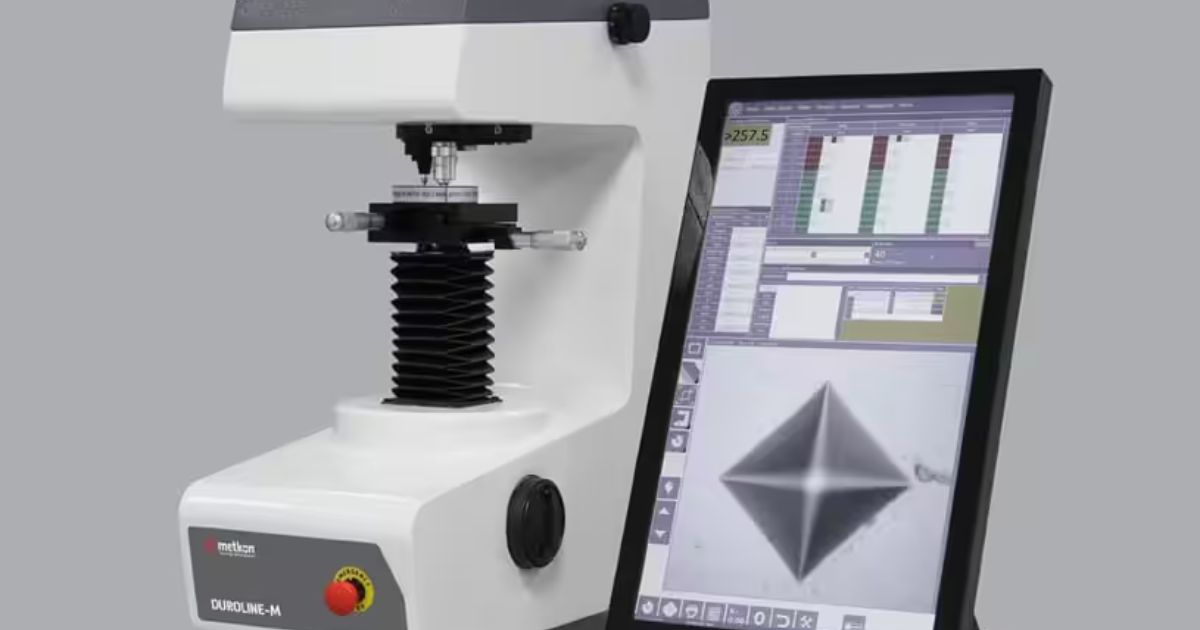
Hardness testing is very important in metalwork. It helps people know if a metal is hard or soft. Factories use hardness tests every day. Also, these tests help make strong and safe products.
Such as two common hardness scales are Vickers hardness and Rockwell hardness. And many companies use a conversion chart to change one value into another value.
Many industries now use modern machines for testing. If you want to read more about professional testing equipment, the Hardness Testing Machine – OTS Technik is trusted by many factories and testing labs.
What Is Hardness?
Hardness means how strong a material’s surface is. And also it shows how well a metal can resist scratches, dents, or pressure.
Hard metals last longer. Soft metals can bend or be damaged more easily.
Hardness testing helps companies make better products.
Why Hardness Testing Is Important
Hardness testing is important because it helps check product quality. If the metal is too soft, the product may break. If it is too hard, it may crack.
Factories use hardness testing to make safe and strong products.
Hardness testing is used in:
- Car factories
- Steel factories
- Tool making
- Aerospace industry
- Construction work
- Machine production
This test helps save money and reduce product problems.
What Is Vickers Hardness?
Vickers hardness is a popular hardness test. In this test, a small diamond tool presses into the metal surface.
The machine checks the size of the small mark. Then it gives a hardness number called HV.
Vickers testing is very accurate. It can test both soft and hard metals.
Many labs and factories use this test because it works for many materials.
Benefits of Vickers Hardness Testing
Vickers hardness testing has many good points.
It gives very accurate results. It works on small and thin metal parts. It leaves only a tiny mark on the surface. It is good for many types of metals.
This test is often used for research and quality control.
What Is Rockwell Hardness?
Rockwell hardness is another common test. This test checks how deep a tool goes into the metal under pressure.
Rockwell testing is fast and simple. Many factories use it during production work.
There are different Rockwell scales, such as HRB and HRC. HRC is mostly used for hard steel materials.
Benefits of Rockwell Hardness Testing
Rockwell testing is very popular because it is quick and easy.
It does not need a lot of preparation. It gives fast results. It is good for large factories and mass production.
Many workers prefer this test because it saves time.
Why Use a Conversion Chart?
Sometimes one factory uses Vickers values and another factory uses Rockwell values. A conversion chart helps change one value into another value easily.
This helps workers understand hardness numbers better.
The chart also helps:
- Save time
- Improve quality control
- Reduce mistakes
- Make work easier
- Improve communication between companies
Vickers Hardness to Rockwell Conversion Chart
200 HV is about 13 HRC. 250 HV is about 20 HRC. 300 HV is about 31 HRC. 350 HV is about 38 HRC. 400 HV is about 43 HRC. 450 HV is about 47 HRC. 500 HV is about 50 HRC. 550 HV is about 52 HRC. 600 HV is about 55 HRC. 650 HV is about 57 HRC. 700 HV is about 60 HRC.
These numbers are close to each other. Real results may change a little depending on the metal type.
How Conversion Works
There is no simple formula for every metal. Different metals react differently during testing.
Because of this, standard charts are used for conversion.
Many things can change the result, such as:
- Metal type
- Surface condition
- Heat treatment
- Material thickness
- Testing pressure
That is why testing must be done carefully.
Industries That Use Hardness Testing
Many industries use hardness testing every day.
Car companies test engine parts and gears. Construction companies test steel materials. Tool makers test cutting tools. Aerospace companies test aircraft parts.
Hardness testing helps make products stronger and safer.
Importance of Accurate Testing
Good testing gives correct results. Wrong testing can create weak products.
Accurate hardness testing helps:
- Improve safety
- Increase product life
- Reduce damage
- Improve product quality
- Lower repair costs
This is why companies use modern testing machines.
Types of Hardness Testing Machines
There are different types of hardness testing machines.
Manual machines are simple and low-cost. Workers control these machines by hand.
Digital machines are faster and more accurate. They show results on a screen.
Automatic machines are used in large factories. They save time and reduce human mistakes.
If you want to read more about advanced testing systems, the Hardness Testing Machine – OTS Technik offers professional solutions for many industries.
Tips for Better Hardness Testing
Always keep the metal surface clean before testing. Use the correct pressure during the test. Check the machine regularly. Use trained workers for testing work.
These simple steps help give better and more correct results.
Difference Between Vickers and Rockwell Testing
Vickers testing is slower but more accurate. Rockwell testing is faster and easier.
Vickers testing is good for small and thin materials. Rockwell testing is good for factory production work.
Both tests are useful in different situations.
Future of Hardness Testing
Today, hardness testing machines are becoming smarter and faster.
Modern systems now offer digital screens, automatic reports, computer connections, and better accuracy.
Many factories now use smart machines to improve production quality.
Conclusion
Vickers and Rockwell hardness tests are very important in the metal industry. A conversion chart helps workers compare hardness values easily and quickly.
Good hardness testing improves product quality, safety, and durability. Many industries now use advanced testing machines for better results.
If you want to read more about professional hardness testing equipment, the Hardness Testing Machine – OTS Technik provides reliable solutions for modern industrial testing.


 Umar Attique Shah