 IQnewswire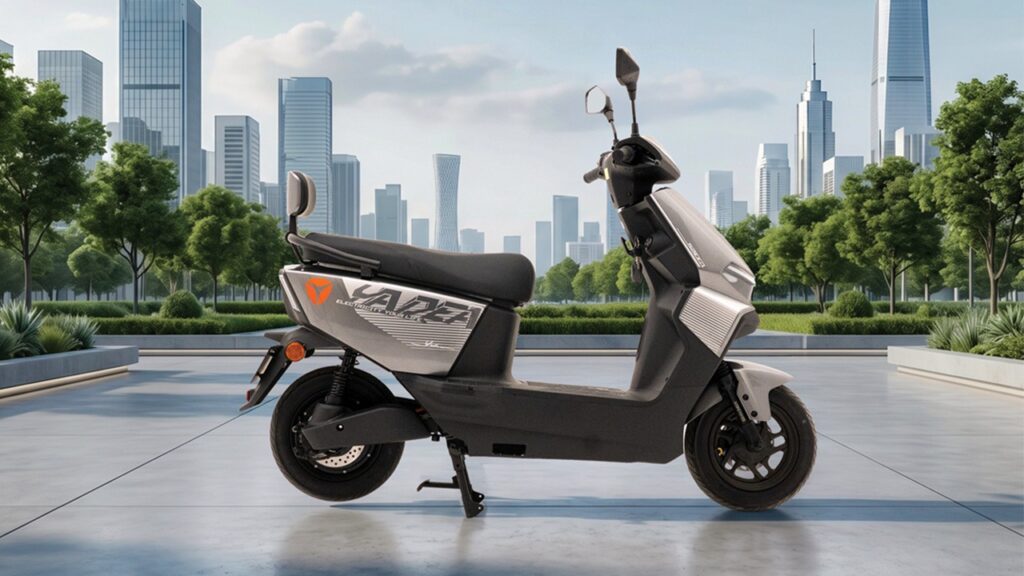
If you are making PKR 30,000 a month in Pakistan and ride a 70cc bike to work, you are spending almost one rupee out of five of what you earn on just fuel. On the other hand, an electric bike in Pakistan costs roughly one rupee out of every forty earned.
When you switch from a petrol bike to an EV motorcycle, you will know what you actually are going to save. In this blog, you will learn the actual running costs are and what the switch means for your wallet before you decide anything else.
The Petrol Bike’s Real Monthly Bill
If you have a 70cc bike and cover almost 35 km daily, then you might understand this situation better. Once every 7 to 9 days, you have to fill your bike, and with the current petrol prices, the petrol fill-up costs around PKR 700 to 900 depending upon the tank size. This is exactly three to four fill-ups a month before you consider anything else.
If we pull out the full picture of the petrol bike running cost per month, then this is what it looks like item by item:
- Fuel cost sits at PKR 2,800 to PKR 3,600
- Oil changes average PKR 1,000 to 1,400
- Spark plug price averages at PKR 100 to 133 (changed after three months, with the price ranging between PKR 300 to 400)
- Air filter service twice a year at PKR 400 to 600, making month cost at PKR 80 to 100
- Brake service is done the same as air filters for PKR 600 to 1,000 twice a year, bringing the total monthly cost to PKR 100 to 167.
If we add up all of this, then the total monthly cost sits at PKR 4,100 to 5,400 on a conservative estimate.
The point of this format is that it shows you something that even if petrol were free tomorrow, a petrol bike still costs you Rs 1,300 to Rs 1,800 per month just to stay functional. That cost has no equivalent on an electric bike with an LFP battery.
The Electric Bike’s Real Monthly Bill
When you switch from petrol to electric bikes in Pakistan, the changes in the monthly bills will be different. A standard lithium electric scooty uses roughly 2 units of electricity for a full charge covering 75 to 100 km. The domestic electricity rate is PKR 45 to 60 per unit, so a full charge costs PKR 90 to 120.
A rider who commutes daily 35 km one full charge covers two days of riding, which is roughly 15 charges per month. The charging cost sits at PKR 1,350 to 1,800 depending on the city and tariff.
Services like oil change, spark plug, air filter, and carburettor have zero charges. Electric motors don’t use engine oil, and mechanical maintenance is limited to battery, motor and tyres. Brake services remain mostly averaged at PKR 100 per month.
Total monthly cost for an electric motorcycle in Pakistan is around PKR 1,450 and 1,900. Compared to the petrol bike’s Rs 4,100 to Rs 5,400, the monthly difference is PKR 2,700 to 3,500 saved every single month.
The 3-Year Total Ownership Picture
If we talk about EV bike price, it is higher than a petrol-powered one. A new 70cc petrol bike is PKR 185,000 to 200,000, whereas a lithium-battery electric scooty is PKR 250,000 to 300,000, a difference of PKR 70,000 to 100,000.
Now, if we run the 3-year running cost for each of the bikes, the petrol one’s cost sits at an average of PKR 4,800 per month; multiply that by 36 for 3 years, you’ll get PKR 172,800. Add the purchase price to the running cost, and the total 3-year cost of the petrol bike is approximately PKR 357,800 to 372,800.
An electric bike sits at an average of PKR 1,650 per month; multiplied by 36 months equals Rs 59,400 in running costs over 3 years. Add the purchase price to the running cost; the total 3-year cost of the electric bike is approximately Rs 309,400 to Rs 359,400.
The important note is that the electric bike is cheaper to own over 3 years even after paying more upfront, and the gap widens every month when petrol prices stay the same or rise further.
When resale value is factored in, premium EV brands with LFP batteries and longer warranties maintain better resale value. This means the final 3-year cost advantage of a quality electric motorcycle in Pakistan is even larger than the running cost calculation alone.
The One Thing That Can Ruin The Calculation
Not all electric bikes in Pakistan use the same type of battery, and the savings only apply to lithium battery models, specifically LFP chemistry. Lead-acid and basic graphene batteries degrade fast in Pakistan’s summer heat and typically need full replacement within 2 to 3 years at a cost of Rs 25,000 to Rs 60,000.
LFP (lithium iron phosphate) is rated for 2,000 or more charge cycles; a one full charge per day roughly means 5 to 7 years of daily use before the battery capacity drops. Lead-acid is rated for 300 to 400 cycles, meaning it may need replacement within 18 to 24 months of daily use.
The Yadea T5L uses an LFP battery and is built specifically for riders looking for a low running cost alternative to petrol bikes in Pakistan. The battery and motor combination is designed for long-term urban commuting. A 4-year, 50,000 km combined motor and battery warranty is the benchmark to use when comparing any other model.
The Number That Makes The Decision For You
The most important number in this entire comparison is not the purchase price. It is the PKR 3,000 to 3,500 you can save every month. For a rider earning PKR 30,000 a month and travelling 35 km daily, that works out to around 10% of their income staying in their pocket instead of going into fuel and maintenance costs.
Over time, the decision becomes less about the purchase price and more about the total cost of ownership. This is where electric bikes continue to be an advantage for daily commuters in Pakistan.


 Sky Bloom
 Umar Attique Shah