
 alishanasir237@gmail.com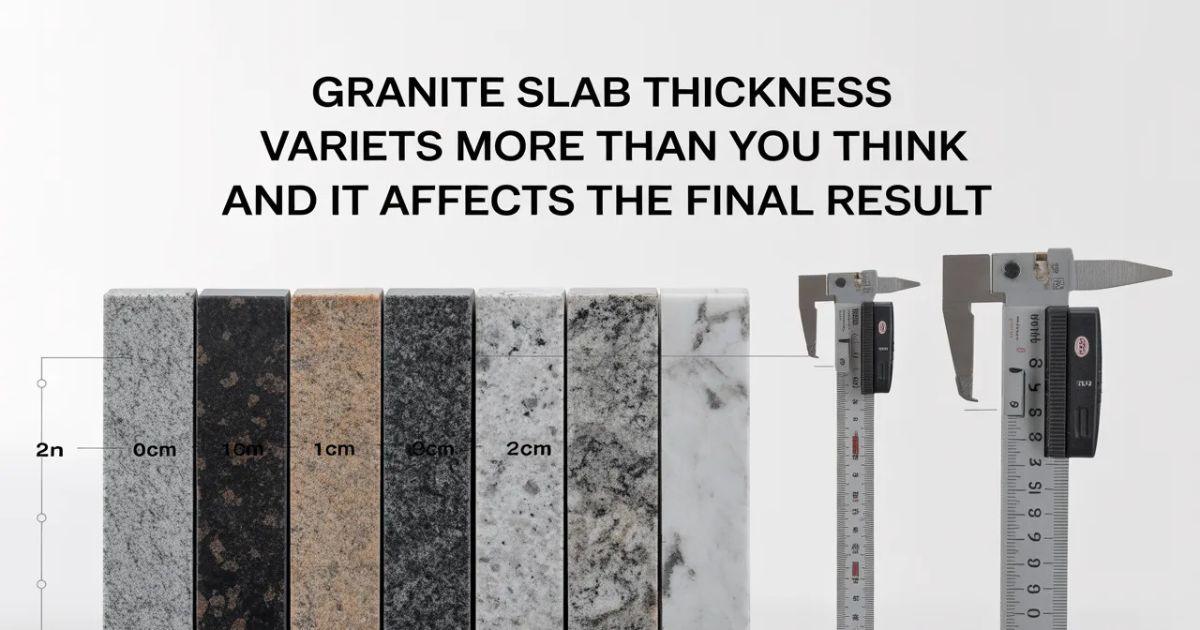
It is easy to focus on colour, pattern, and finish when selecting stone for a kitchen. Many homeowners walk into showrooms, choose what looks appealing, and assume all slabs perform the same once installed. In reality, thickness is one of the most important factors that determine how the final benchtop looks and functions. When reviewing granite slabs, it becomes clear that thickness is not always consistent across suppliers or materials. Even small differences can affect durability, installation requirements, and the overall finish. What looks like a minor detail during selection often becomes a major factor once the stone is installed.
Why Granite Slab Thickness Is Not Always Standard
Granite is a natural material, which means variation is part of its character. Unlike manufactured products, it is not produced to a single uniform specification. Slabs are cut from large stone blocks, and the final thickness depends on the cutting process, equipment calibration, and intended application.
Different suppliers may offer slabs in slightly varying measurements even within the same category. While 20mm and 30mm are considered standard, the actual thickness can shift depending on how the natural stone is processed. This is particularly noticeable when slabs are sourced from different quarries or manufacturers.
Cutting techniques also play a role. Some slabs are calibrated to precise measurements, while others retain slight natural variation. These differences are not always obvious at the showroom stage, but they can influence installation and finishing later.
Common Thickness Options and What They Mean
Most granite benchtops fall into two main thickness categories: 20mm and 30mm. Each option offers different advantages depending on how the stone will be used.
A 20mm slab is lighter and often chosen for a sleek, modern look. It works well for vertical applications or areas where weight needs to be managed. However, it usually requires additional support underneath to maintain stability.
A 30mm slab is thicker and more structurally stable. It is often used for stone kitchen benchtops because it can support itself more effectively across cabinets and spans. The added thickness also provides a more substantial visual presence, which many homeowners prefer.
There are also less common options, such as 40mm slabs, but these are heavier, more expensive, and not always practical for standard cabinetry.
The key difference is not just appearance. Thickness directly affects how the stone performs under pressure, how it is installed, and how it holds up over time.
How Thickness Affects Installation
Installation requirements change significantly depending on slab thickness. A thinner slab typically needs additional reinforcement. This may include a plywood base or extra support structures to prevent flexing or cracking during use. Thicker slabs are more forgiving during installation. They can often be placed directly onto cabinetry without additional backing, reducing the complexity of the process. This makes them more suitable for larger surfaces or areas with minor inconsistencies in cabinet alignment.
Weight is another important factor. Increasing thickness from 20mm to 30mm adds a significant amount of weight per square metre, which affects handling, transport, and installation logistics. Installers need to account for this during planning to avoid placing structural strain on cabinetry.
Edge detailing is also influenced by thickness. Thinner slabs often require built-up edges to create a thicker visual effect, while thicker slabs naturally provide a more substantial edge profile.
Impact on Durability and Long-Term Use
Thickness plays a direct role in durability. Thicker slabs are generally more resistant to cracking, particularly around stress points such as sink cut-outs and corners. This makes them a safer choice for high-use kitchen areas.
Thinner slabs can still perform well, but they rely heavily on proper support and careful installation. Without this, they are more vulnerable to damage over time, particularly in areas exposed to heavy loads or frequent impact. Load-bearing capacity is another consideration. Thicker slabs distribute weight more effectively, reducing stress on specific points. This is particularly important for kitchen islands or benchtops with overhangs.
Over time, daily use also affects performance. Repeated pressure, heat exposure, and general wear can impact thinner slabs more quickly if they are not adequately supported. Thicker slabs tend to maintain their structural integrity for longer under the same conditions, which is why they remain a popular choice among Sydney stone suppliers working on kitchen projects.
Why Choosing the Right Thickness Matters
Selecting the right thickness is about matching the material to how the space will be used. A thinner slab may work well for decorative or low-use areas, but it may not be suitable for heavy-duty kitchen applications.
Balancing aesthetics and function is essential. While a sleek profile may look appealing, it should not compromise stability or durability. Similarly, choosing a thicker slab purely for appearance without considering weight and installation requirements can create practical challenges. Making an informed decision early helps avoid complications later. Issues such as cracking, uneven installation, or structural strain are often linked to mismatched thickness choices rather than the quality of the stone itself.
This is why conversations with experienced stone fabricators at the planning stage are so valuable. They can guide the selection based on cabinetry, span, and intended use rather than appearance alone.
Conclusion
Granite slab thickness is not a minor detail. It directly affects how the benchtop looks, how it is installed, and how it performs over time. Variations between slabs, suppliers, and applications mean there is no one-size-fits-all choice. Understanding the difference between 20mm and 30mm options allows homeowners to make decisions based on function as well as appearance. When thickness is chosen carefully, the final result is more stable, durable, and visually consistent.
FAQs
What is the standard thickness for granite slabs? Most granite slabs are available in 20mm and 30mm thickness, though variations can occur depending on the supplier.
Is thicker granite always better? Not always. Thicker slabs offer more strength, but the best choice depends on the application and support structure.
Does slab thickness affect cost? Yes. Thicker slabs use more material and are generally more expensive, both in material cost and installation.
How does thickness impact durability? Thicker slabs are more resistant to cracking and stress, particularly in high-use areas.
What thickness is best for kitchen benchtops? 30mm is commonly preferred for kitchen benchtops due to its strength and ability to support itself across cabinetry.
Can thinner slabs crack more easily? Yes. Thinner slabs are more prone to cracking if they are not properly supported or installed.


 Umar Attique Shah