
 alishanasir237@gmail.com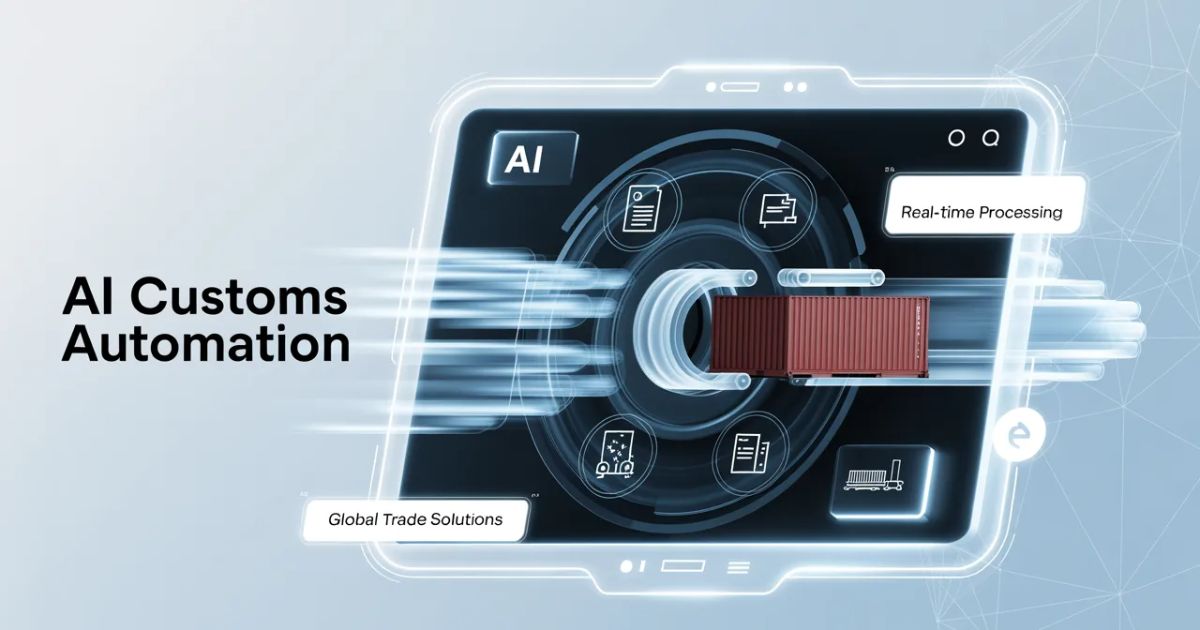
You can cut customs delays, reduce costly classification errors, and scale cross-border volume without hiring a large compliance team by using Artifical intelligence to automate filings, verify commodity data, and flag risk before shipments reach the border. AI customs automationstreamlines e-commerce workflows so your orders clear faster, costs drop, and compliance stays proactive.
This post AI Customs Automation for Ecommerce Businesses walks through the practical benefits and the steps you need to adopt Artifical intelligence-driven customs tools for online retail. Expect clear guidance on what automation actually does for classification, document handling, and risk screening, plus implementation strategies that fit your operation and tech stack.
Key Benefits of AI-Driven Customs Solutions
Artifical intelligence reduces repetitive work, cuts classification mistakes, and helps move goods through borders faster. It gives you measurable gains: fewer delays, lower penalties, and clearer audit trails.
Streamlined Compliance Management
These systems automatically extract and validate data from invoices, packing lists, and product images so you don’t manually reconcile dozens of fields. They map product attributes to Harmonized System (HS) codes using trained models, reducing ambiguous classifications that trigger audits.
You can embed regulatory rulesets and tariff updates into the workflow so declarations align with current duty, license, and trade agreement requirements. The system flags missing licenses, restricted-party matches, and origin discrepancies before filing, letting you correct issues proactively.
Use role-based alerts and audit logs to maintain a clear compliance trail for customs authorities and internal reviewers. That lowers your risk of fines and speeds dispute resolution because you can produce timestamped evidence of review and correction.
Reduction in Manual Processing Errors
Artifical intelligence-powered OCR and natural language processing cut data-entry errors common when staff transcribe documents from multiple languages and formats. Automated validation checks compare declared values, weights, and quantities against purchase orders and shipment manifests to catch inconsistencies.
Machine learning models learn from past corrections to improve future predictions, so error rates decline over time without constant rule tweaking. This reduces rework, fewer rejected entries, and lower costs from shipment holds or adjustments.
You also gain consistency across large volumes of e-commerce shipments, where SKUs and descriptions vary widely. That consistency reduces variance in duty calculations and harmonizes reporting across channels and 3PLs.
Increased Customs Clearance Speed
Predictive risk-scoring models rank shipments by inspection likelihood, enabling low-risk consignments to move through automated lanes while higher-risk items receive targeted checks. That triage reduces average clearance time for routine e-commerce parcels.
Automated pre-clearance filing sends accurate entry data to border systems before arrival, which shortens port processing queues. When combined with real-time status updates and exception workflows, you can resolve documentation issues during transit rather than at arrival.
Faster clearance lowers inventory turnaround and holding costs. It also improves customer experience by reducing delivery delays and providing reliable ETAs for international orders.
Implementation Strategies for Online Retailers
Focus on connecting automation to real systems, choosing tools that match your data and workflows, and preparing staff for new processes and responsibilities. Prioritize interoperability, measurable KPIs, and phased rollouts to reduce risk.
Integration With Ecommerce Platforms
Map your current stack first: list platform (Shopify, Magento, BigCommerce), ERP, WMS, payment gateway, and CRM. Identify available APIs, webhooks, and middleware options so you can choose whether to build direct integrations or use iPaaS connectors.
Ensure real-time inventory and order sync to avoid oversells. Validate SKU matching rules, multi-warehouse logic, and return flows during a staged pilot. Test edge cases like partial shipments and canceled orders.
Define data contracts (fields, formats, update frequency) and implement monitoring for sync failures. Use idempotent operations and retry logic. Maintain a rollback plan and feature flags to disable automation quickly if errors occur.
Selecting the Right Automation Tools
List business priorities (customs classification, duty calculation, label generation) and rank them by ROI and compliance risk. Select tools that support HTS/Schedule B updates, multi-currency duties, and localized tax rules if you ship internationally.
Evaluate vendors on three axes: accuracy (how rules and ML models perform on your SKUs), integration (API robustness, SDKs, connector availability), and support (SLA, customs expertise). Request test runs on a representative sample of SKUs and historical orders.
Compare pricing models: per-transaction, subscription tiers, or revenue-share. Account for hidden costs such as mapping, custom connectors, and compliance updates. Prefer solutions with sandbox environments and clear SLAs for classification disputes.
Staff Training and Change Management
Create role-based training for operations, customer service, and compliance teams. Teach operators how automation decisions are made, where to intervene, and how to escalate exceptions. Keep sessions short and scenario-driven.
Establish new operational playbooks documenting exception workflows, manual override steps, and audit trails. Assign ownership for monitoring dashboards and monthly reviews of classification accuracy and cost-to-serve metrics.
Roll out changes in phases: sandbox → pilot → limited production → full production. Measure KPIs at each phase (error rate, time-to-fulfill, landed cost accuracy) and iterate. Communicate policy changes proactively to reduce resistance and ensure consistent execution.


 Sky Bloom
 Umar Attique Shah