 alishanasir237@gmail.com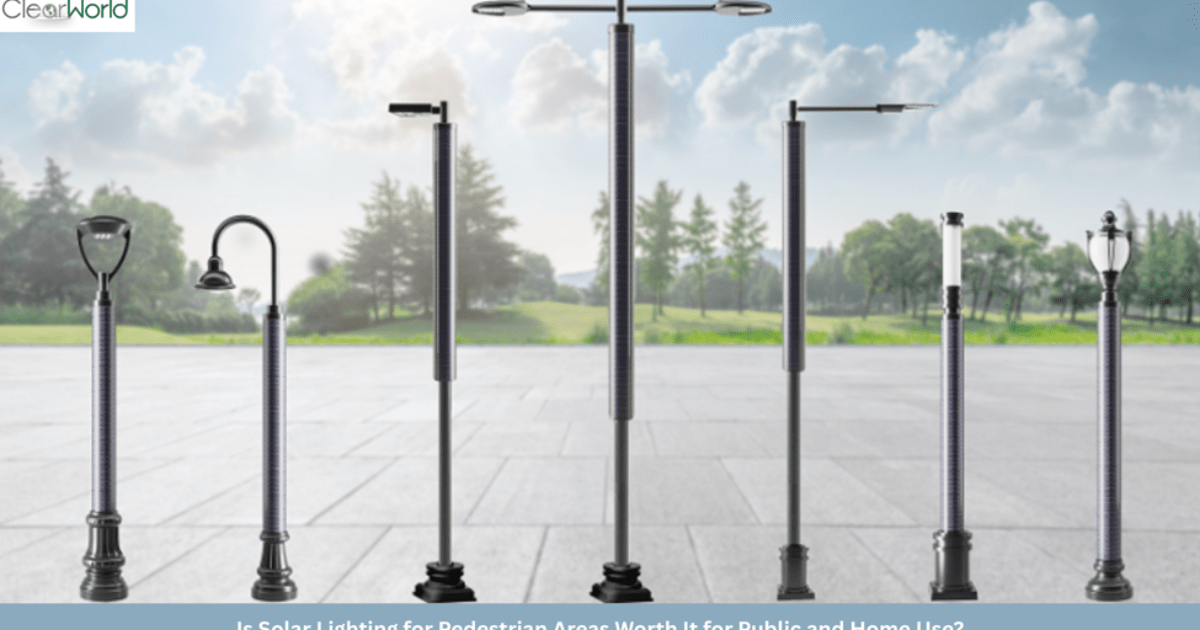
If you’ve ever walked through a dimly lit park, pathway, or public walkway at night and thought, “there has to be a smarter way to light this,” you’re not alone. Solar Lighting for Pedestrian Areashas become one of the most practical and cost-effective solutions for municipalities, developers, and homeowners across the USA. Whether you’re managing a public space or simply looking to brighten your backyard path, this article covers everything you need to know, from choosing the right fixture to understanding the specs that actually matter.
What Are the Best Solar Lighting for Pedestrian Areas?
Most solar lights you find in hardware stores aren’t built for serious pedestrian use. They’re decorative at best. Real pedestrian-grade solar lighting is a different category. Here’s what separates the good from the forgettable. Here are the names of some of the best Solar Lights for pedestrians. Let’s have a look at it:
Off-Grid Systems That Actually Run All Night
The best systems are fully independent of the electrical grid. They charge during the day and run through the night on stored battery power no trenching, no wiring, no monthly utility bill. For parks, rural trails, or new developments where running electrical lines is expensive, this matters enormously. With advanced battery storage, a well-designed system keeps running even through two or three overcast days without interruption.
LED Fixtures That Light the Path, Not Blind the Walker
LEDs use far less energy than older tech and last significantly longer. For pedestrian use, you want wide beam angles that spread light evenly across a path and a Color Rendering Index (CRI) above 70 so people can actually see what’s ahead. Harsh, narrow spotlights create blind spots. Even well-distributed light keeps people safe, and that’s the job.
Hardware Built to Take a Beating
Rain, snow, coastal humidity, summer heat, and outdoor lights deal with all of it. Quality pedestrian fixtures use powder-coated aluminum or galvanized steel housings with fully sealed components. IP65 is the minimum rating worth considering. Anything lower and you’ll be replacing fixtures far sooner than expected, which defeats the whole point of a low-maintenance system.
When off-grid independence, smart Solar Lighting For Pedestrian Areas output, and tough construction come together, you get a system that runs reliably for years with minimal attention. That’s the whole point.
What Are the Key Technical Specifications of Solar Lighting?
Spec sheets can feel overwhelming. But a few numbers tell you almost everything. Here are the five that actually matter: Given below are the key technical specifications of Solar Lights. Let’s have a look at it:
Lumen Output
Lumens measure total light output. For a standard pedestrian pathway, aim for 3,000 to 6,000 lumens depending on path width and pole spacing. Busy crosswalks or wide plazas need more. It’s not just about how much light the fixture produces; it’s about how well that light spreads across the surface.
Battery Capacity
Measured in watt-hours (Wh), battery capacity tells you how long the light runs without sun. For full-night coverage, roughly 10 to 12 hours, you want 2 to 3 nights of backup capacity. Lithium iron phosphate (LiFePO4) batteries are the preferred choice: they handle both cold northern winters and hot southern summers, and they last far longer than older battery types.
Solar Panel Wattage
The panel needs to fully recharge the battery on a typical day. For most pedestrian fixtures, that means 40W to 120W. In northern US states with shorter winter days, lean toward higher wattage. Monocrystalline panels are the most efficient type and the right call for any serious installation.
IP Rating
IP65 means the fixture is sealed against dust and heavy rain, which is the baseline for outdoor pedestrian lighting. In humid or coastal areas like Florida or Louisiana, look for IP66 or IP67. A low IP rating is consistently the reason cheap fixtures stop working within a year.
Smart Controls
Motion sensing and programmable dimming stretch battery life meaningfully. Running at 30% during quiet hours and ramping to full brightness when someone walks past can save several hours of reserve power each night. Better systems also support remote monitoring, so a facilities team can track performance across a full installation without manual site visits.
If a supplier can’t hand you a spec sheet covering these five points, that tells you something. The numbers should be easy to find and easy to verify.
Can These Solar Lighting For Pedestrian Areas Also Be Used Outside a Home?
Yes, and they often outperform what you’d buy at a home improvement store. The same engineering that keeps a public walkway lit all night through a rainstorm works just as well on a residential driveway, garden path, or side yard. These systems are fully off-grid, so no electrician is needed, no wiring, nothing complicated. Place the pole, and it runs on its own. For homeowners across the USA who want real security lighting without a higher electricity bill, commercial-grade solar fixtures are genuinely worth considering.
The durability gap of Solar Lighting for Pedestrian Areas is also real. Consumer solar lights use plastic casings and undersized panels; they fade and stop working within a season or two. Commercial-grade fixtures built for pedestrian areas use aluminum housings, high-efficiency panels, and lithium batteries designed to run for years. If you’ve replaced garden path lights two or three times already, you know why that matters. Many of these systems are also customizable, with pole height, light output, and mounting that can be adjusted to fit a front walkway, backyard patio, or detached garage. One solid system, installed once, that holds up.
Conclusion
Solar Lighting For Pedestrian Areas works, and it works well beyond public walkways. The right system brings together reliable off-grid power, efficient LED output, and hardware built to last. Get the specs right, and you have lighting that runs every night without grid dependency, without high maintenance costs, and without compromise on safety.


 Umar Attique Shah