
 alishanasir237@gmail.com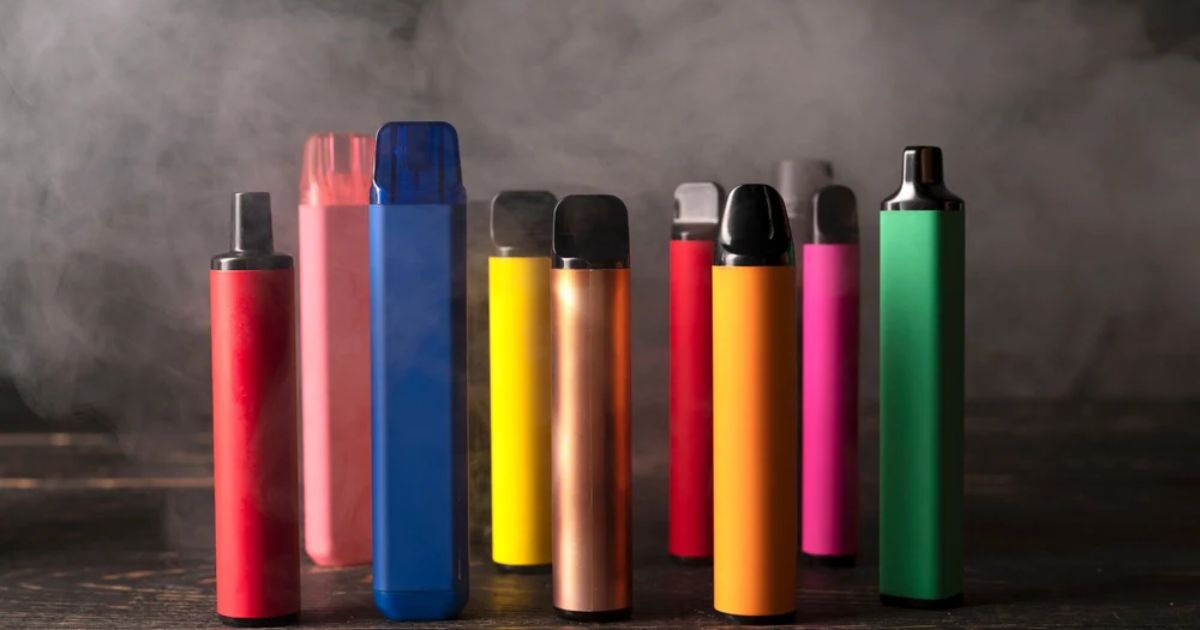
Not long ago, vaping was a hobbyist pursuit. Devices had coils that needed replacing, tanks that needed filling, and batteries that had to be charged on separate hardware. If you wanted to vape, you needed to care enough to learn. That changed when disposables arrived in force, and the shift has been more significant than most people outside the category realize.
The rise of the disposable vape did not just introduce a new product format. It redefined who vapes, why they do it, and what they expect from the experience. Understanding that shift matters not only for people curious about the market but for anyone thinking about how consumer habits evolve when friction is removed from a purchasing decision.
The Old Barrier: Commitment Before You Even Inhaled
Early e-cigarettes and vape mods required a meaningful upfront investment, both financial and cognitive. A starter kit with a decent mod, a tank, coils, and e-liquid could run anywhere from $40 to over $100. Then came the learning curve: understanding wattage settings, coil resistance, PG/VG ratios in e-liquid, and the discipline to recharge before the battery died at an inconvenient moment.
For the committed vaper, this was fine. The community around devices and flavors was rich, and enthusiasts treated the technical side as part of the appeal. But for someone who wanted an occasional nicotine alternative without the gear-head commitment, the category simply did not serve them. The casual consumer was an afterthought.
What Disposables Actually Changed
The disposable format removed every friction point at once. No charging (at least for the first generation), no filling, no settings to adjust, no components to replace. You open the packaging, use the device until it runs out, and dispose of it. For a category built on delivering a specific sensation, this simplicity proved transformative.
The market data backs this up. Global e-cigarette retail sales outside China reached $23 billion in 2024, and disposable vapes drove a significant portion of that growth, with disposable sales volume climbing nearly 19 percent year over year, according to industry tracking published by Tobacco Insider. That is not incremental category growth. It reflects a structural change in who is buying.
The broader disposable e-cigarette market, valued at roughly $6.9 billion in 2024, is projected to reach $21.2 billion by 2034, growing at a compound annual rate of 11.9 percent, according to analysis from Market.us on disposable e-cigarettes. Non-tobacco flavor variants accounted for 66.9 percent of that market in 2024, which is its own signal: the people driving growth are not longtime cigarette smokers looking for a tobacco-flavored substitute. They are consumers choosing a product on its own terms.
The Casual Vaper as a New Consumer Identity
Before disposables became widely available, the vaping consumer population skewed toward people who had made a deliberate decision to either quit smoking or invest in vaping as a dedicated habit. Disposables created a third category: the casual vaper who treats the product the way someone might treat a ready-to-drink cocktail versus home bartending.
CDC data from the National Health Interview Survey illustrates how the adult e-cigarette population has expanded. The percentage of adults using e-cigarettes rose from 4.5 percent in 2019 to 6.5 percent in 2023, with the largest increases occurring in adults aged 25 to 44, a demographic that largely did not exist in the early vaping market. The full CDC electronic cigarette trends analysis shows that growth was not concentrated in any single demographic slice but spread across multiple age groups simultaneously. That pattern is consistent with a format change, not merely a marketing push.
The casual vaper is not necessarily someone who vapes every day or has a strong preference for specific devices. They might pick up a disposable at a convenience store, use it over a weekend, and not think about it again for weeks. The product fits that behavior in a way that a refillable device simply does not.
Flavor Variety as a Purchase Driver
One underappreciated dimension of the disposable boom is how flavor variety changed the buying decision. With traditional devices, flavor selection came at the e-liquid stage and required buying a bottle, often 30ml or more, which meant committing to a choice. Disposables flipped this: trying a new flavor costs the price of a single device and carries no ongoing obligation.
This altered the psychology of selection entirely. Casual consumers browse flavor options the way they might browse streaming content: with low commitment and high willingness to try something new. The variety available online, where selection is not constrained by shelf space, amplifies this dynamic considerably.
The question of where to buy and what the differences are between sourcing options becomes especially relevant here. The comparison of online versus in-store vape purchasing illustrates why online retail has gained ground: the full catalog of flavors, puff counts, and nicotine strengths is available without the limitations of physical shelf space, and pricing generally benefits from lower overhead costs. For a casual buyer whose purchase decision is driven by exploration rather than brand loyalty, that selection depth matters.
How This Affects the Vaping Consumer Broadly
The emergence of the casual vaper has implications for how the industry thinks about product development, retail placement, and communication. A device designed for an enthusiast who cares about coil configurations is a fundamentally different product from one designed for someone who wants to try a watermelon-flavored nicotine experience on a Friday evening.
Retailers and manufacturers have responded to this by investing heavily in packaging, flavor naming, and device aesthetics. The disposable vape market increasingly competes on presentation and variety rather than on technical specifications. That is a consumer market dynamic, not a hobbyist one.
There is also a practical dimension worth noting. Casual consumers tend to do less pre-purchase research than dedicated vapers. They are more likely to rely on point-of-purchase signals, online reviews of specific products, and peer recommendations. The decision architecture is closer to impulse-driven consumer goods than to electronics purchasing.
Where the Market Is Heading
Regulatory activity is the primary pressure on the disposable segment. Governments in numerous countries have moved to restrict or ban specific disposable formats, particularly those with high puff counts or concentrations that exceed national thresholds. In the United States, the FDA premarket authorization process means that products without approval face removal from retail channels.
This does not eliminate the casual vaper as a consumer identity. It does mean that the market will likely consolidate around larger, authorized brands, and that the variety question, which drove much of the casual adoption, may narrow. Whether casual consumers remain in the category if flavor options contract is an open question that the market has not yet had to answer at scale.
The concept of casual or occasional consumption as a distinct consumer segment is something Digitalquil has explored in related contexts. Consumer behavior around lifestyle-driven purchasing decisions and product discovery follows similar patterns across categories: when friction drops, the potential audience expands beyond the early adopter base and into a broader, less committed population.
A parallel pattern is visible in how consumers approach product exploration generally. The buyer’s guide framework for consumer decisions reflects a broader shift in how people approach purchases where they lack deep category knowledge: they look for clear signals, low initial commitment, and the ability to recalibrate based on experience. Disposable vapes succeeded partly because they fit that mental model precisely.
The Broader Lesson
The disposable vape story is ultimately a case study in what happens when a specialized consumer category removes its barriers to entry. The committed enthusiast does not disappear. But a much larger population of casual, occasional, or curious consumers enters the market, and the category has to evolve to serve both simultaneously.
The casual vaper is now a permanent feature of the vaping landscape. They buy differently, choose differently, and require a different kind of product than the device-focused early adopters who built the category. That shift reshapes everything downstream: product design, retail strategy, regulatory arguments, and the cultural meaning of vaping itself.
What changed was not just the device. It was the type of person the device was designed for.