
 alishanasir237@gmail.com
If you’ve ever lived in a small apartment, you’re probably familiar with this feeling of Wall Art for Small Spaces.
Even though you don’t have that many things, it still feels a bit “cramped.”
It’s hard to put into words—it’s not clutter, nor is it dirtiness; it’s just a sense that the space feels stifled.
Especially when you come home from work and walk through the door—if the lighting is even slightly dim, you might feel like you don’t want to move a muscle, completely drained of energy.
I used to think the problem was the furniture—I always assumed it was a matter of layout. But after experimenting a few times, I realized that, more often than not, the issue lies with the “walls.”
Think about it: bare walls can feel cold and empty, but if you don’t handle them right, they can make the space feel even more cramped.
It sounds a bit contradictory, but that’s precisely the subtle challenge of small spaces.
Why Do Walls Affect the “Sense of Space”?
This is actually quite interesting.
Think about it: whether a space feels large or not depends not only on the square footage measured with a tape measure, but also on that visual sensation of “seeming quite spacious.”
Take a 10-square-meter room, for example. If all four walls are bare white, it might look clean, but after a while, it feels monotonous—even even a bit “stuffy.” But if the walls have just a little bit of depth—say, a well-chosen painting or a touch of color—hey, look again: the space suddenly seems to have “depth.”
Simply put, our eyes are always looking for a place to extend toward, pause at, and then move further into. If the walls are completely bare, your gaze hits the wall instantly—nowhere to go. But if there’s a painting there, your eyes get drawn in. Following the lines, colors, or negative space within the painting, your gaze naturally moves deeper into the space, instantly making it feel more open.
Small apartments especially need this kind of visual extension—it takes up no floor space yet makes your home feel significantly larger.
Why Decorative Art Is the “Secret Weapon” for Small Apartments
When it comes to “expanding” a small apartment, many people’s first instinct is to build more cabinets, declutter, or even knock down walls. But there’s actually a method that requires no demolition or construction and doesn’t take up a single inch of floor space—it’s about using visual tricks to “trick” the eye into perceiving more space.
Decorative art is exactly that kind of solution.
Think about it: it’s a thin piece hanging on the wall, not blocking your path or getting in the way, yet it subtly alters the rhythm of how you perceive the room. Especially when you choose the right size and subject matter, the effect is truly striking.
I remember one time when I replaced a blank white wall in my living room with a painting that had a horizontal, elongated composition. Guess what? The entire living room suddenly felt “wider”—not that it actually got bigger, but it just felt more open and spacious. It didn’t add a single square foot, but it just looked so much more balanced.
That’s why I say decorative art is a particularly worthwhile investment for small apartments.
The More You Try to Make Wall Art Look Bigger, the More Likely You Are to Make a Mistake
Let me tell you, the biggest mistake people make with small apartments is trying too hard. They feel the space is too small, so they try to force it open, but it ends up backfiring.
For example, some people choose paintings with very bright, bold colors specifically to make the room look bigger, thinking it creates “impact,” but it actually makes the space look even more cluttered.
Others hang lots of small prints, thinking it adds richness, but if there’s no cohesion—with colors and styles all over the place—it just makes the walls look fragmented.
Another common issue is mismatched sizes.
If a piece is too small, it looks cramped; if it’s too big, it feels overwhelming.
These problems might not stand out individually, but when combined, they make the space feel even more “cluttered.”
Some simple yet effective tips
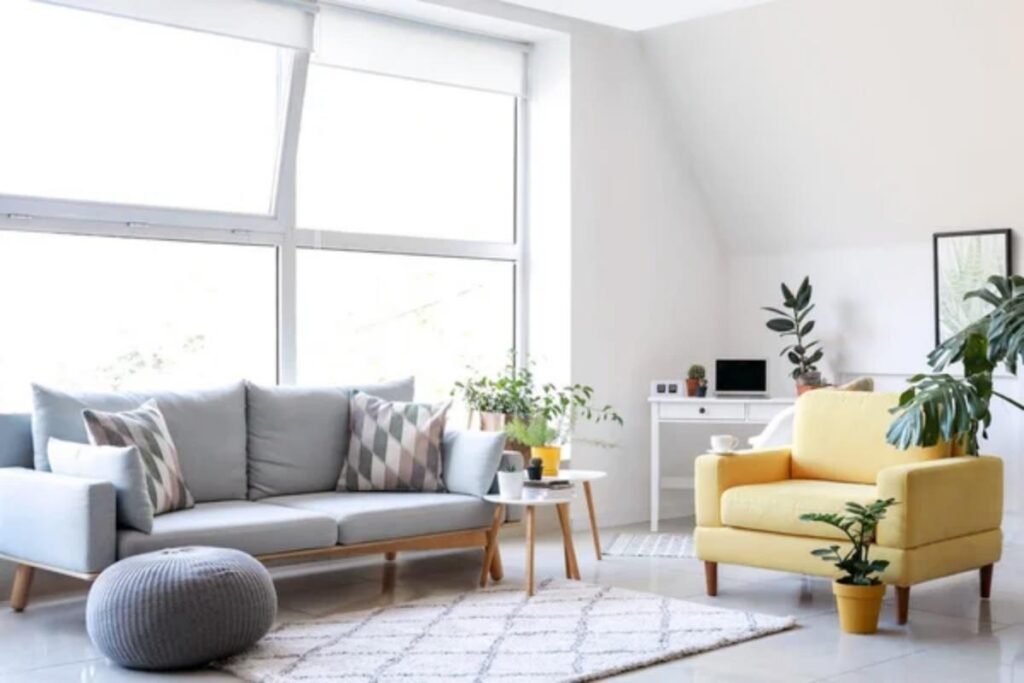
If you ask me if there’s a simple, low-effort approach, I’d probably say—try giving your walls some “breathing room.”
Don’t overcrowd the walls with too many pieces; leave a little white space. This creates a more relaxed, less oppressive atmosphere. Another key factor is color. Try to stick to the room’s existing color scheme. For example, if your walls are already light-colored, don’t choose paintings that stand out too sharply; opt for softer, more muted tones instead. This creates a more comfortable overall look. One more thing: the “orientation” of the artwork. Give it a try—horizontal paintings tend to make a space look wider, while vertical ones create a sense of height.
You don’t need to memorize these rules, but if you take the time to pay a little more attention, the difference is actually quite significant.
Those subtle changes in daily life
For a while, I lived in a pretty small apartment—about 20 square meters.
When I first moved in, it felt really oppressive, especially at night. As soon as I turned on the lights, the space felt even more cramped; it was hard to breathe. Later, I began to gradually adjust the walls. First, I replaced a painting—nothing too expensive—taking down the old, drab one and putting up a light-colored one with some negative space. Then I switched out a lamp for one with softer light, and eventually added a few other small decorations here and there. These changes didn’t happen overnight, and I didn’t expect them to completely transform the place.
But one evening, when I walked in after work, I suddenly realized—hey, I don’t seem to resist coming back to this room as much as I used to. Sometimes I even sit on the sofa for a while, just spacing out, without feeling annoyed. I can’t quite put my finger on what’s changed, but it just doesn’t feel as “cramped” anymore.
When it comes to choosing, you can actually take it a bit easier
For many people, the moment they start thinking about picking out art, they get bogged down in worries about style, whether it matches, or if the proportions are right—making the whole process seem incredibly complicated.
But my personal take is that you really don’t need to make such a big deal out of it right from the start. Just pick a piece that catches your eye, hang it up, step back a couple of paces to take a look, and then slowly adjust the things around it.
The pieces I eventually chose from Huemaster have a generally understated feel—they’re not flashy, and they don’t immediately grab your attention. These kinds of paintings are actually perfect for small spaces—because they don’t steal that “breathing room” and won’t make the room feel even more cramped. Especially their series with minimalist lines or soft color blocks; they don’t feel oppressive on the wall, and you won’t get tired of looking at them. In fact, the more you look, the more peaceful they feel.
A few final thoughts
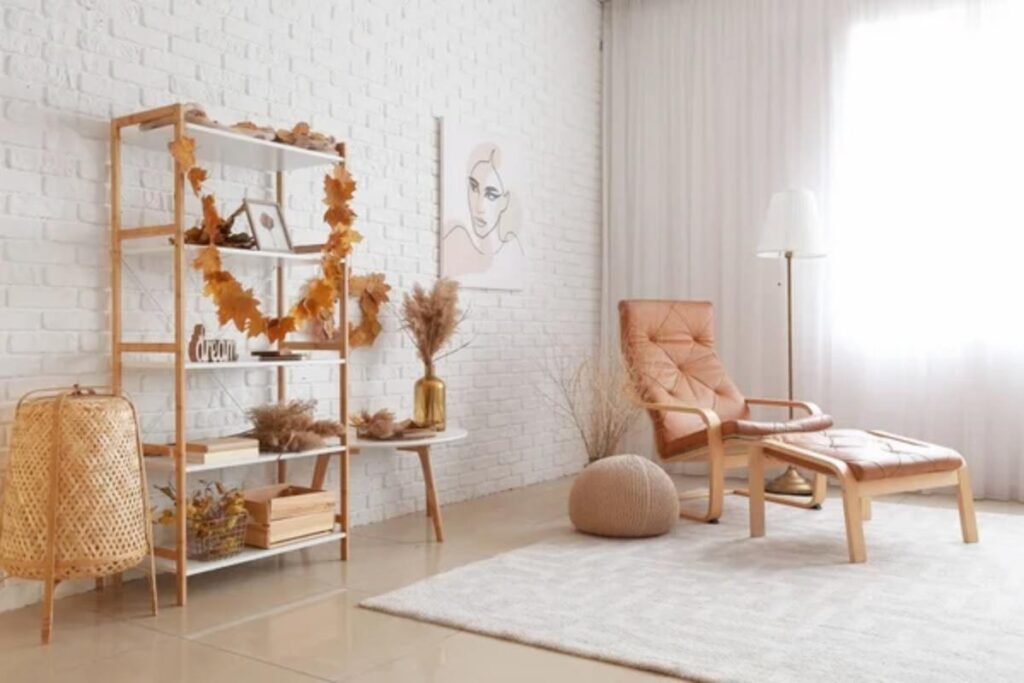
Ultimately, expanding a small space isn’t necessarily about making it physically larger, but about making it feel less cramped. The physical space remains the same, but the experience is different.
When you use your walls well, it can help you relax. It doesn’t have to be perfect—just fine-tune it gradually. Who knows? One day you might realize that the room doesn’t seem so small after all.


 Umar Attique Shah