
 alishanasir237@gmail.com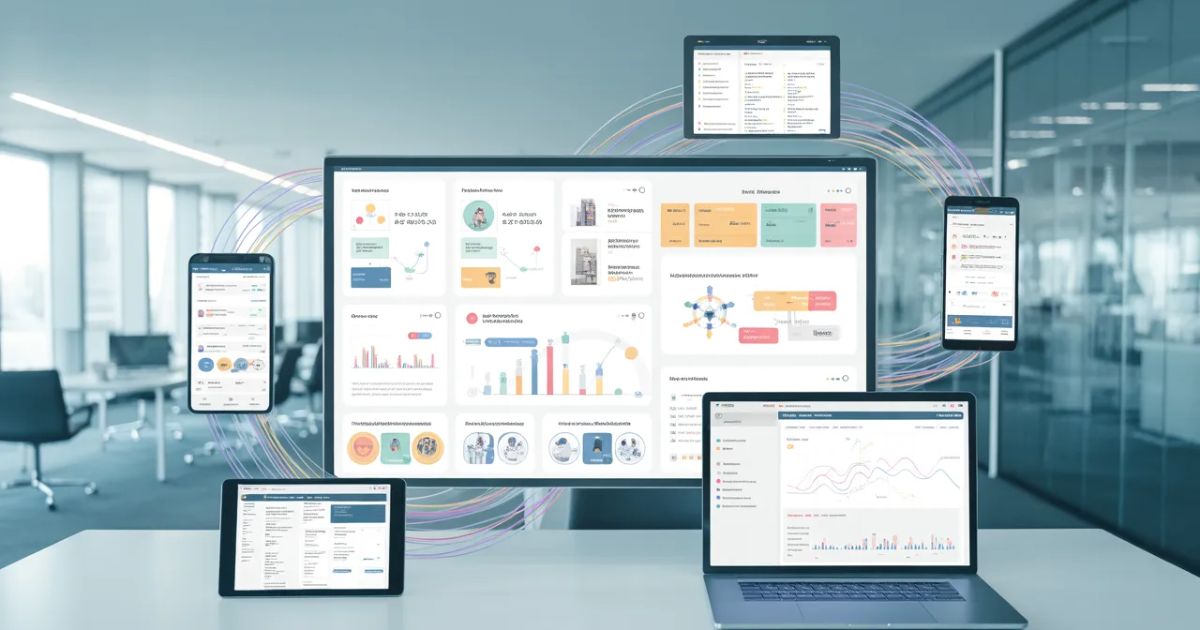
As businesses grow, managing operations becomes increasingly complex. Teams rely on multiple departments, large volumes of data, and continuous coordination across finance, operations, procurement, inventory, and customer management.
Many organizations initially operate with separate tools for different functions, but disconnected systems eventually create inefficiencies, reporting delays, and operational confusion. This is why businesses are increasingly investing in modern ERP systems that centralize operations and improve overall visibility.
However, choosing the right ERP platform is not only about digitizing workflows. Businesses need systems that can support long term scalability, operational efficiency, and future growth.
Modern enterprise resource planning software should provide far more than simple reporting or administrative functionality. The right platform should help businesses streamline operations, improve collaboration, and support smarter decision making across the organization.
Real Time Data Visibility
One of the most important features businesses should look for in an ERP systems is real time visibility into operations.
Without accurate and accessible data, decision making becomes slower and less reliable. Departments often work with outdated reports, disconnected spreadsheets, or inconsistent records that create confusion across the organization.
Modern ERP systems centralize business information into one connected platform. This allows teams to access real time insights related to inventory, financial performance, procurement, operations, and customer activities.
Real time visibility helps businesses respond faster to operational issues while improving strategic planning and forecasting.
Automation Capabilities
Manual workflows become major obstacles as businesses scale. Employees spend significant time managing repetitive tasks such as approvals, reporting, invoicing, procurement tracking, and inventory updates.
These activities not only reduce productivity but also increase the risk of human error.
A modern ERP system should include strong automation capabilities that simplify repetitive operational processes. Automated workflows improve efficiency, reduce administrative overhead, and allow teams to focus on higher value work.
Businesses should look for ERP platforms that support automation across finance, inventory management, procurement, reporting, and operational approvals.
Scalability for Future Growth
Scalability is one of the most critical factors when selecting an ERP system.
Many businesses make the mistake of implementing platforms that solve current challenges but cannot support future expansion. As organizations grow, operational complexity increases significantly.
Modern ERP systems should be able to support:
- Multiple business locations
- Growing customer bases
- Expanding product lines
- Larger operational teams
- Increasing transaction volumes
A scalable ERP platform helps businesses expand without constantly replacing or restructuring their internal systems.
Integration With Existing Systems
Businesses rarely operate with a single software platform. Most organizations already use tools for communication, customer management, ecommerce, analytics, payroll, or cloud infrastructure.
An ERP system should integrate smoothly with existing business applications to avoid operational disruption.
Strong integration capabilities allow businesses to connect workflows across departments while maintaining operational consistency. This improves data accuracy and reduces the need for manual information transfers between systems.
Organizations should prioritize ERP platforms that offer flexible integration support and compatibility with modern business tools.
Financial Management Features
Financial visibility becomes increasingly important as businesses grow. Leadership teams require accurate financial reporting to manage budgeting, forecasting, expenses, and operational planning effectively.
Modern ERP systems should include strong financial management capabilities such as:
- Real time financial reporting
- Expense tracking
- Budget management
- Revenue monitoring
- Cash flow visibility
- Procurement cost analysis
Accurate financial insights help businesses make more confident strategic decisions while identifying operational inefficiencies earlier.
Inventory and Supply Chain Management
For businesses managing products or logistics, inventory visibility is essential.
Poor inventory tracking often leads to stock shortages, overstocking, fulfillment delays, and operational inefficiencies that directly impact customer experience.
Modern ERP systems should provide advanced inventory and supply chain management capabilities that improve forecasting, tracking, procurement coordination, and warehouse visibility.
Businesses should look for platforms that help optimize inventory planning while improving operational responsiveness across the supply chain.
User Friendly Interface
Even the most advanced ERP system can create challenges if employees struggle to use it effectively.
Complex interfaces slow down adoption and reduce operational efficiency. A modern ERP platform should provide a clean, intuitive, and user friendly experience that allows teams to navigate workflows efficiently.
Businesses should prioritize systems that simplify operational management rather than adding unnecessary complexity to daily tasks.
User adoption plays a major role in the long term success of ERP implementation.
Security and Compliance Support
As organizations handle larger amounts of business and customer data, security becomes increasingly important.
ERP systems often manage sensitive financial information, operational records, employee data, and procurement details. Strong security controls are essential for protecting this information from unauthorized access or data breaches.
Modern ERP platforms should include:
- Role based access controls
- Secure authentication
- Data encryption
- Audit tracking
- Compliance support
Businesses operating in regulated industries should also ensure the ERP system supports industry specific compliance requirements.
Cloud Accessibility and Flexibility
Cloud based ERP systems have become increasingly popular because they offer greater flexibility, accessibility, and scalability compared to traditional on premise solutions.
Cloud ERP platforms allow teams to access business information securely from different locations while improving collaboration across remote or distributed environments.
Businesses should look for ERP solutions that support flexible access, automatic updates, and scalable cloud infrastructure to support future operational needs.
Choosing the Right ERP System Matters
Implementing an ERP system is a long term operational investment. The right platform can improve efficiency, visibility, scalability, and decision making across the entire organization.
Businesses should avoid selecting ERP systems based only on short term requirements or pricing. Instead, organizations should focus on long term operational value, scalability, integration capabilities, and ease of adoption.
Modern ERP systems are no longer just administrative tools. They have become critical operational platforms that support business growth, efficiency, and long term strategic planning.
Companies that choose the right ERP solution early are often better positioned to scale operations confidently while maintaining consistency and operational control.


 Umar Attique Shah