 alishanasir237@gmail.com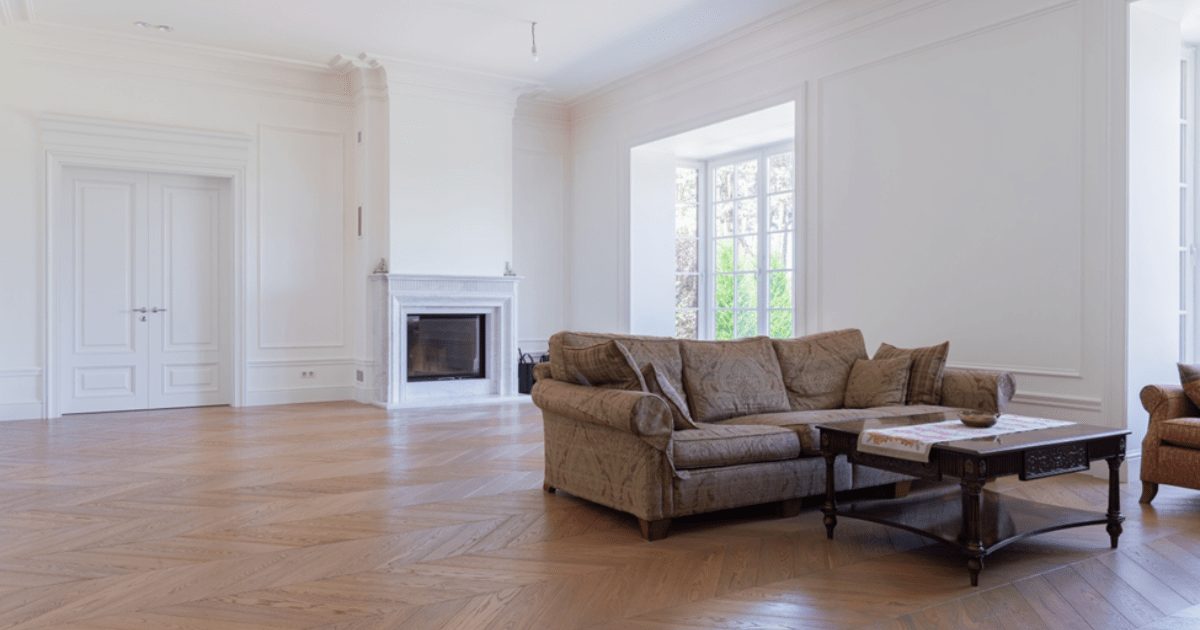
Walk through a villa renovation in Jumeirah or Al Barsha right now and you’ll see the same swap happening again and again: out goes the cold marble or large-format porcelain, in comes wood laid in herringbone. After years of glossy tile being the default in Dubai’s high-end homes, parquet is back in the rooms where people want warmth underfoot, and the engineered versions on the market now hold up in this climate far better than the solid wood floors that gave parquet a reputation for warping decades ago.
What Is Parquet Flooring?
Parquet is wood cut into short blocks or strips and laid in a repeating geometric pattern instead of long straight planks. The pattern is the whole point, the way the pieces angle against each other is what gives a parquet floor its look, where a normal wood floor just runs board after board in one direction.
What matters more for your decision is whether the wood is solid or engineered. Solid parquet is a single piece of hardwood all the way through, so it can be sanded back and refinished several times over its life, but it also moves with humidity, swelling and shrinking as the air changes. Engineered parquet puts a real hardwood veneer on top of a plywood or HDF core built up in cross-layers, which stops most of that seasonal movement. The trade-off is that the thin top layer can only be sanded once or twice before you hit the core, sometimes not at all on the cheaper boards.
Popular Parquet Patterns
Herringbone is the pattern most people picture: rectangular blocks set at 90 degrees so each row steps off the last in a broken zigzag. It reads as classic and works across both traditional and modern Dubai interiors, and because the pattern pulls the eye along its length it suits hallways and larger living rooms where there’s room for it to run.
Chevron gets confused with herringbone constantly, but the difference shows on close look. The blocks are cut at an angle on the ends and meet point to point, so the seams form one continuous unbroken “V” running down the floor rather than the staggered step of herringbone. It’s the sharper, more deliberate of the two, and it leans contemporary.
Then there are the patterns that aren’t about the zigzag at all. Basket weave sets blocks in little squares that alternate direction like a woven mat, which gives a flatter, more textured surface that’s easier on the eye in a smaller room where herringbone would feel busy. Wide-plank parquet, where the pieces are larger and laid in simpler blocks, is the most low-key option and the one that passes for a regular wood floor until you look down.
Why Parquet Works Well in Dubai
The reason engineered parquet matters so much here comes down to what the air does to wood. A Dubai home runs the AC hard for most of the year, pulling interior humidity low, then switches it off during travel or milder months, and that swing between dry and humid is exactly what makes solid wood expand and contract until gaps open between the boards or the edges cup. Engineered boards barely move through that cycle because the cross-layered core holds them stable, so they’re the safer pick for most apartments and villas unless the room is climate-controlled year round.
Set against tile, parquet brings warmth that hard surfaces can’t, and a well-laid wood floor reads as a quality finish that holds its value when the property is sold or rented.
Parquet vs Other Flooring Options
Laminate is the option people weigh against parquet most often because a good laminate photographs almost identically to wood and costs a fraction of the price. The difference is underfoot and over time: laminate is a printed image of wood under a plastic wear layer, so it feels harder and hollower to walk on, it can’t be sanded if it scratches, and once the surface wears through there’s no fixing it, only replacing. For a rental or a short-term fit-out where budget rules, that’s a fair trade. For a home you’re keeping, the printed surface starts to give itself away.
Vinyl and SPC are the stronger comparison because they solve the one thing parquet can’t: water. SPC in particular is fully waterproof and dimensionally stable, so for a kitchen, a bathroom, or a ground-floor area that might flood, it makes more sense than wood ever will. Where parquet wins is authenticity and feel, real wood has depth, grain variation, and a warmth that even the best printed vinyl approximates rather than matches.
The simple way to split it: put parquet in living rooms, bedrooms, and formal spaces where the look and the resale value justify the cost, and use SPC or vinyl in the wet zones and the high-abuse areas where wood would be a liability.
Pros and Cons of Parquet Flooring
On the plus side, parquet gives a floor a timeless, high-end look that doesn’t date the way trend-driven finishes do, it adds genuine value to a property, and if you’ve gone with solid wood you can sand and refinish it to erase years of wear and reset the surface.
The downsides are real and worth knowing before you commit. Wood reacts to moisture, so a leak left sitting or a consistently damp room will damage it in a way tile shrugs off. It scratches under dragged furniture, grit, and pet claws. And it’s not a floor you lay yourself over a weekend, getting parquet right needs a level subfloor and skilled fitting, which adds to the cost and rules out the DIY route.
Cost & What Affects the Price
Four things move a parquet quote: the wood species, its grade, the finish, and the floor area. An oak or walnut in a high grade with few knots costs well above a lower grade of the same wood, and a hand-finished oil surface adds over a standard factory lacquer. Larger areas usually bring the per-square-meter rate down a little, since the fitting time per meter drops once the team is set up.
Solid parquet sits at the top of the price range because you’re paying for hardwood all the way through. Engineered comes in lower for a comparable look, and the gap widens as the species gets more expensive, since engineered only uses a thin layer of the costly wood on top.
Lifespan & Long-Term Value
A solid parquet floor that’s looked after can run for decades, and because it can be sanded back multiple times, it can outlast several refits of the rooms around it. Engineered parquet has a shorter ceiling, the thin veneer limits how many times you can refinish it, so figure on a long life but not the multi-generational span of solid wood.
Care is what decides where a floor lands in that range. The same engineered board sees very different lifespans depending on whether spills get wiped fast and grit gets kept off it, or whether it’s left to take water and scratches.
Installation & Maintenance Tips
The subfloor is where most parquet problems start. If it isn’t properly leveled and dry before laying, the floor can lift, creak, or develop gaps no matter how good the wood is, and moisture trapped underneath will work its way up into the boards over time. This is skilled work, and getting quality, professional Parquet flooring dubai installation is what decides whether the floor performs for decades or starts failing within a couple of years.
Day to day, keep it swept or vacuumed so grit doesn’t grind into the finish, wipe spills before they sit, and keep the room from swinging between extreme humidity levels where you can. A solid floor will want refinishing every several years depending on traffic; an engineered one needs the same care minus the heavy sanding it can’t take.
Conclusion
Pick the pattern that fits the room’s scale, go engineered unless your space stays climate-controlled, and put the money into a level subfloor and proper fitting. Do that and a parquet floor earns its place in a Dubai home for decades rather than years.