
 IQnewswire
If we go back a few years, capturing a beautiful photo needs time and equipment. Getting the shot at the right moment is the trick. Sometimes you need to change the lens and sometimes you have to change the settings to get true colors and ambience. Now the best camera mobile has changed the game.
5 years ago, a good smartphone camera meant having a great amount of megapixels and HDR processing. But now it’s all about optical physics, real AI image generation and professional-grade processing.
Every year, a new feature is added that seemed impossible inside a mobile phone before, such as zoom, AI, and underwater photography. You’ll be told in detail on how these specifications have changed the game of mobile photography.
A Quick Look at Where Smartphone Cameras Started
Cameras in smartphones have come a long way. It started from under 2MP, where the lens had a single focus point and had no flash. Then, over time, we got LED flash, autofocus, and front cameras for selfies.
After that came the megapixel race, where companies started delivering smartphones with a camera beyond 100MP. Now in the present day and age, all the talk is about sensor quality. People cared more about image quality, where the focus was on computational photography rather than hardware upgrades.
The real innovation era began when AI entered the camera pipeline, everything before that was hardware iteration, and what came after was a fundamental change in how photos are made.
The Zoom Revolution
Earlier models had a single problem, which was taking or editing a photo while zooming in. Digital zoom means cropping the picture will lose its details, being grainy, soft and unusable beyond 2x.
Some time later dual-camera systems introduced optical zoom on smartphones. With telephoto lenses, there is no image quality loss with optical zoom. The periscope zoom lenses on the other hand, ensure that the smartphone achieves longer focal lengths without increasing image thickness.
The results are getting better and better. The jump from 3x to 5x, 10x and now 100x+ AI-assisted zoom is achieved on flagship and near-flagship devices.
A question arises in one’s mind about what AI SuperZoom actually is. On earlier devices, the optical zoom range is handled up to 3x or 5x better physically. Anything beyond this, an AI algorithm comes into the field to assist.
The algorithm analyzes multiple frames and rebuilds the detail rather than cropping it out. This is the reason why modern 30x or 100x zoom shots are still usable, and older digital zoom at 10x is not.
These zoom upgrades have given space to:
- Wildlife and nature photography without specialist equipment
- Sports and event photography from a distance
- Architecture and detail photography
- Candid photography without intruding on the subject
The Tecno Camon 50 series is one of the examples of an AI-assisted zoom camera. All three models are installed with the same Sony LYT-700C main camera. The Camon 50 Pro has an additional 50MP 3x periscope telephoto with optical image stabilization and 60x AI SuperZoom capability.
On the other hand, the Camon 50 Ultra has a 50MP telephoto with 100x AI SuperZoom and Super-Zoom FlashSnap. This is proof that the periscope zoom lens and AI-assisted telephoto are no longer exclusive to smartphones that are over $1000.
AI in Smartphone Photography
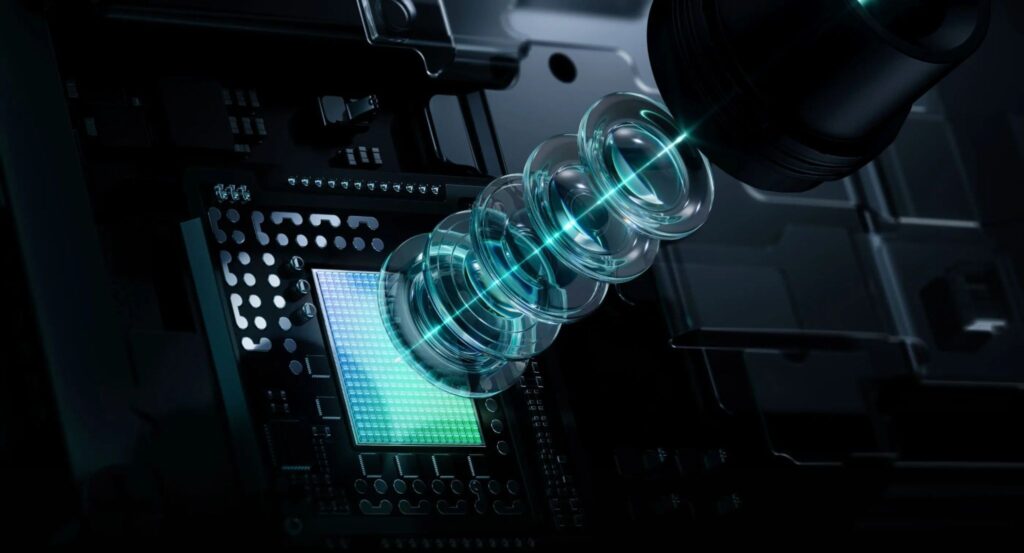
Artificial intelligence in smartphone photography is not only about beautifying pictures or auto-scene detection, but it also plays an important role in how modern smartphone images are actually constructed.
AI at the Point of Capture
Incorporating AI into smartphone cameras has been revolutionary, as it can recognize scenery. The algorithm helps identify whether you are taking a portrait, a landscape, food, night photography, or a document. Before you press the shutter, AI adjusts the setting first.
Then we have real-time HDR processing where AI manages the exposure across the bright and dark areas of the picture altogether during the shot. It also tracks the subject, whether they are stationary or moving, and keeps them sharp throughout the frame, even in burst mode or video.
AI in Post-Processing (Happening Instantly on Device)
In image post-processing, AI does the following work:
- Noise reduction that removes grain without softening detail. This is a phenomenal attribute as AI differentiates between noise and actual texture.
- Computational bokeh, where it maps the depth of a scene and applies background blur that mimics a large-aperture lens
- AI skin tone processing by referencing Pantone-validated accuracy as the standard is now being applied at the sensor level on devices
- Object and shadow removal where AI can now identify and cleanly remove unwanted elements from a frame
AI for Video & Generative AI Features
When you make a video on your smartphone, AI-powered stabilization helps smooth the motion in real time. It also keeps the subject centered during the video as it moves and reduces noise with its All-Scenario Noise Reduction 2.0.
4K selfie videos are going to be prominent as AI will manage the sharpness and exposure frame by frame. The generative features also create the content for you rather than just processing the images. It fills in backgrounds, extends frames, and reconstructs partially obscured subjects.
AI has shifted smartphone photography from a hardware-limited discipline to a software-empowered one. The gap between a great AI imaging engine and a weak one is now as important as the gap between sensor sizes.
Underwater Photography
In addition to the upgrades on the smartphone camera’s zoom capabilities and integration of AI in it, we also upgraded to its hardware that makes underwater photography achievable. Earlier smartphone devices were IPX4 certified that were strong enough to survive rain showers.
Next they got IPX7 rating that was becoming a mid-range standard where the camera can immerse up to 1 meter underwater for 30 minutes. IP68 pushed the range to 2 meters for the same time limit. IP69K is the latest advancement where the devices are protected against high-pressure water jets.
Nowadays devices are rated IP68 and IP69K together. Which means that devices are sealed against dust, can go up to 2 meters for 30 minutes underwater, and are resistant to high pressure and temperature water jets. If your device has both the ratings this means that you device is protected across a wide range of water exposure scenarios.
These ratings with the assistance of AI works wonder for underwater photography. AI color correction fixes the underwater shots that first appeared to be blue-green. Both focus and autofocus works better now as improvements were made in phase-detection AF and help from AI subject tracking help for focusing on a subject.
Lastly shooting angles and ergonomics are made better with physical buttons and dedicated hardware control as it is difficult to use a touchscreen for underwater photography.
Tecno Camon 50 all three models carry IP68, IP69, and IP69K ratings which is rare among any series. Additionally they come with MIL-STD-810H certification which adds drop, shock and temperature resistance along with water protection. If you are looking for an adventure and want to make each and every moment memorable, this series is the answer.
What These Trends Mean for the Everyday Smartphone User?
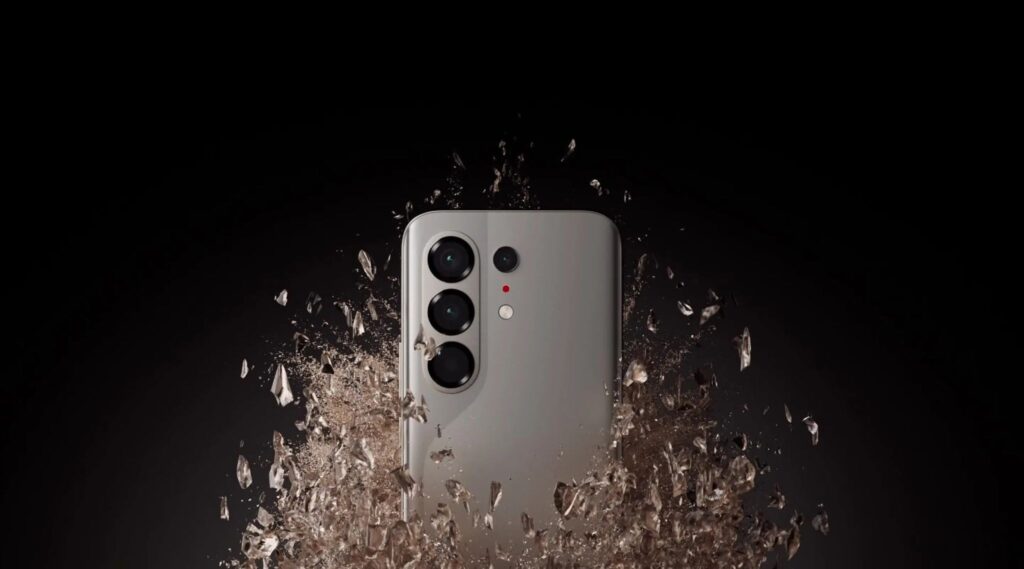
Having a modern smartphone camera comes with a lot of perks and space. You don’t need to carry a second camera for zoom, lowlight or outdoor adventures. As long as you have a smartphone with you let the device handle the rest.
AI will take care of the heavy lifting where you don’t have to edit the photo to make it appealing most of the time. Also smartphones being water resistant can let you take a breathtaking photo while your mobile is being protected.
The best smartphone cameras in 2026 are not great because of one breakthrough, they are great because zoom, AI, and durability have matured together into an accessible package.


 Sky Bloom
 Umar Attique Shah