 alishanasir237@gmail.com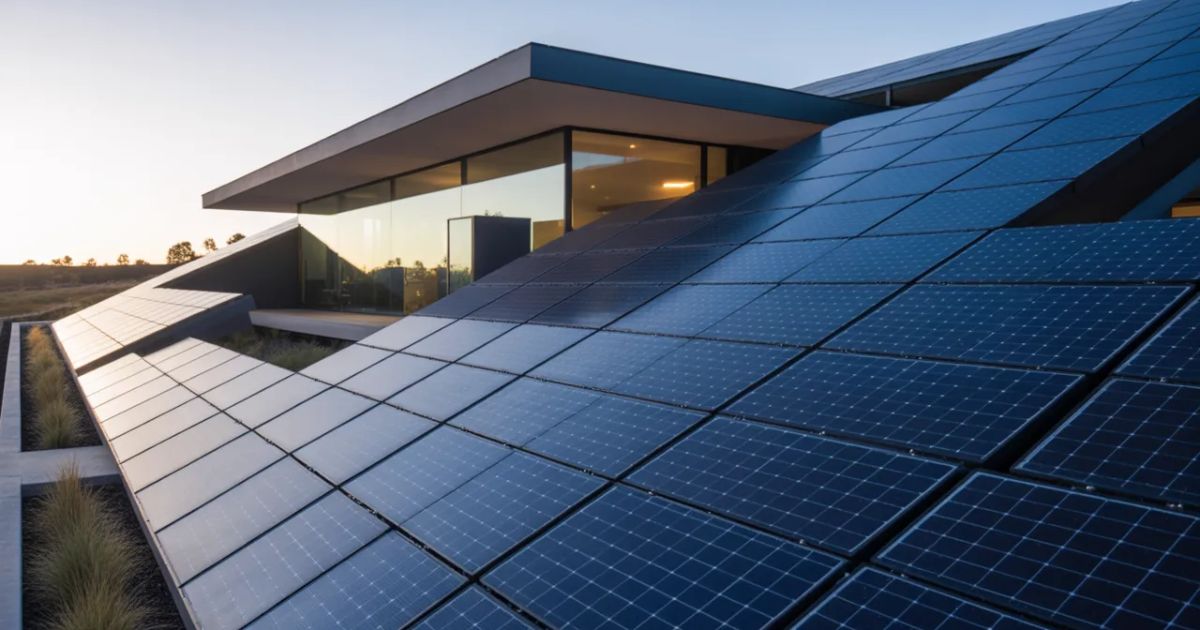
You can turn parts of your building—roofs, façades, windows—into active power generators without sacrificing design. Solar (BIPV) replace conventional building materials with solar-producing components, letting you generate electricity while keeping a clean, cohesive aesthetic.
This post Solar BIPV will show how Solar BIPV works, which materials and technologies make it possible, and how architects and owners use it in real projects to meet energy and design goals. Expect clear, practical examples that help you weigh performance, cost, and design trade-offs for your next project.
Core Technologies and Key Materials of Solar BIPV
You will encounter three technical focus areas: the solar cell chemistry that determines efficiency and durability, how modules become part of the building envelope, and the glass or transparent materials that balance daylighting with power generation. Each area drives performance, aesthetics, and installation methods.
Photovoltaic Cell Types
You choose between crystalline silicon, thin-film, and emerging perovskite technologies based on efficiency, weight, and temperature behavior.
- Crystalline silicon (mono- and multicrystalline) delivers 18–24% typical conversion efficiency, strong long-term reliability, and well-established installation practices. It suits sloped roofs and framed BIPV panels where panel thickness and weight are acceptable.
- Thin-film (CdTe, CIGS, a-Si) trades lower efficiency (typically 10–16%) for lighter weight, flexibility, and better low-light or diffuse-sky performance. It fits curved façades, flexible membranes, and applications where integration with non-standard substrates matters.
- Perovskite and tandem cells are advancing rapidly; they promise higher efficiencies and tunable transparency but currently face stability and scale-up challenges. Consider them for pilot projects where you can accept higher technical risk for potential gains.
Match cell type to your structural limits, aesthetic goals, and lifecycle cost targets rather than picking solely on peak efficiency.
Building Envelope Integration
Integration choices define attachment, thermal performance, and fire/air/water sealing for your BIPV.
- Roof replacements use BIPV as primary roofing material; mechanical attachment and underlayment details must meet wind uplift and drainage codes.
- Curtain walls and façades often rely on framed modules or custom cladding panels; you must coordinate anchorage with the curtain-wall mullions and thermal break requirements.
- Window and shading elements incorporate semi-transparent modules or PV louvers; these need careful glazing details to control condensation and solar heat gain.
You must consider electrical routing, maintenance access, and building code compliance early. Coordination between architect, structural engineer, and electrical designer prevents costly rework.
Glass and Transparent Modules
Glass and transparent PV control visible light transmission, solar heat gain, and durability.
- Tempered or laminated safety glass provides structural protection and meets impact/fire standards; laminates also encapsulate fragile cells and prevent moisture ingress.
- Semi-transparent modules use patterned cells, thin-film layers, or micro-perforated electrodes to achieve specific Visible Light Transmission (VLT) values, typically 10–60%. Choose VLT based on occupant daylighting needs and glare control.
- Selective coatings and low-iron glass improve solar transmittance or reduce spectral losses; low-E coatings can reduce unwanted heat gain but may lower electrical output slightly.
Specify glazing edge seals, moisture barriers, and expected transmittance-to-power trade-offs when you evaluate product data sheets.
Applications in Architectural Design
BIPV replaces conventional envelope materials with electricity-generating components while serving structural, weatherproofing, and aesthetic roles. Expect trade-offs between transparency, thermal performance, and energy yield that affect material choice, orientation, and system integration.
Facade and Curtain Wall Systems
You can integrate thin-film or crystalline PV modules directly into curtain walls as opaque panels, semi-transparent glazing, or ventilated double-skin systems. Opaque BIPV panels often replace spandrel glass or cladding, providing higher watt-per-square-meter output and simpler wiring routes. Semi-transparent PV glazing preserves daylight and outward views while producing electricity; plan for lower cell efficiency, diffused daylighting, and potential glare control.
Key design considerations:
- Electrical layout: string lengths, inverter location, and shading impacts on cell strings.
- Mounting: module framing must meet air/water tightness and wind-load requirements.
- Thermal: ventilated facades improve thermal management and module performance.
Detail coordination with structural, fire, and facade engineers early to avoid post-installation conflicts.
Roof Integration Approaches
On sloped roofs, Solar BIPV shingles or tiles can replace conventional roofing materials, matching roof geometry and loads while feeding building-scale inverters. Flat roofs often use framed BIPV modules in ballast or integrated waterproofing membranes; address roof penetrations and membrane compatibility early.
Operational and design points:
- Waterproofing interface: ensure continuous flashings and compatible membranes.
- Access and maintenance: plan safe walkways and clearances for panel servicing and snow shedding.
- Load and attachment: verify dead load, uplift resistance, and fire code for rooftop PV assemblies.
Coordinate with roofing contractors to select products that meet local wind, snow, and fire codes while minimizing roof replacement complexity.
Urban Energy Solutions
You can deploy Solar BIPV across building types to reduce grid draw, provide local generation, and improve façade energy intensity in dense areas. On high-rise buildings, vertical BIPV yields lower specific energy but contributes to distributed generation and peak-demand reduction when combined with storage or smart controls.
Implementation tactics:
- Mixed-use planning: combine roof arrays, facade PV, and shading devices to maximize available surface area.
- Performance modeling: use site-specific irradiance, orientation, and shading analysis to size systems and predict ROI.
- Regulatory integration: align with local zoning, historic preservation, and grid interconnection rules.
Integrate Solar BIPV with building energy management systems to shift loads, optimize self-consumption, and coordinate with on-site storage or EV charging.