
 alishanasir237@gmail.com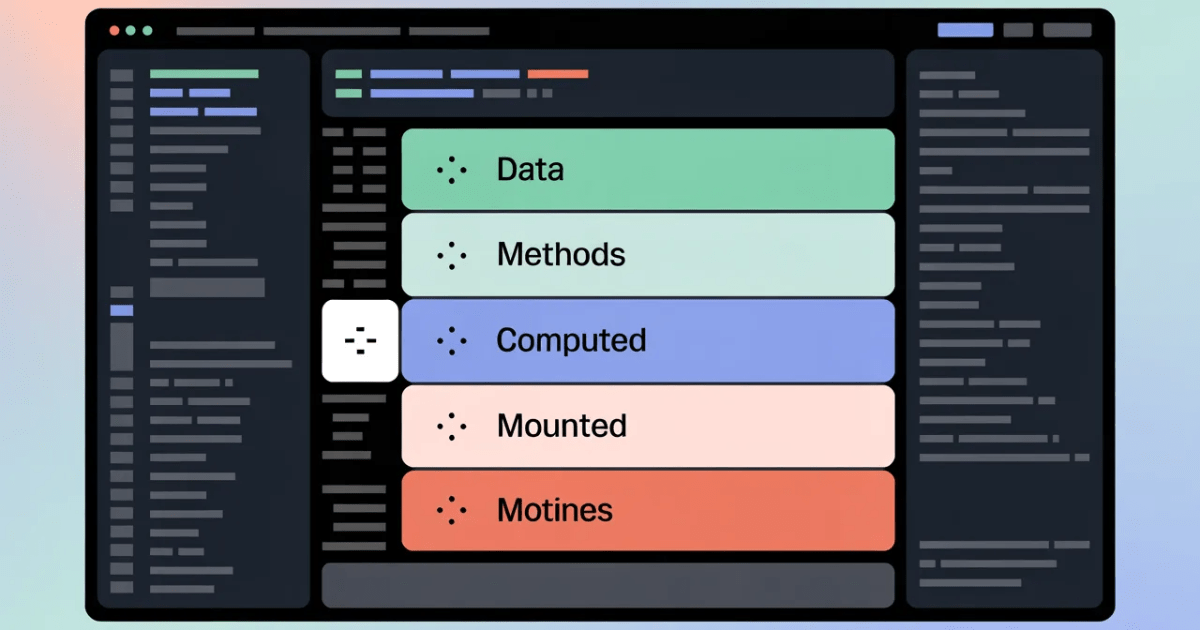
Vue.js is widely recognized for its flexibility and developer-friendly architecture. One of its foundational approaches for structuring components is the Options API in Vue.js, which organizes logic into clearly separated sections such as data, methods, computed properties, and lifecycle hooks. This pattern became popular because it simplifies component management and improves readability in frontend applications. For teams working on structured interfaces and maintainable codebases, the Options API continues to remain highly relevant. Even with newer composition-based patterns available, many businesses still rely on this architecture for long-term application stability and predictable development workflows.
What is the Options API in Vue.js
The Options API is a component structure pattern where application logic is grouped into predefined configuration sections.
Common sections include:
- data
- methods
- computed
- watch
- lifecycle hooks
This structure helps developers organize logic in a readable and modular way, especially in applications with clearly separated responsibilities.
The Options API in Vue.js is often preferred in projects where code clarity and onboarding simplicity are important.
Why Developers Still Prefer the Options API
Many development teams continue using this architecture because of its simplicity and predictability.
Key advantages include:
- Easier readability for large teams
- Structured component organization
- Faster onboarding for new developers
- Clear separation of concerns
- Better maintainability for traditional workflows
These strengths make it practical for long-term frontend projects.
Core Sections of a Vue Component
Vue components built with the Options API follow a predictable structure.
Data
Stores reactive component state and dynamic values.
Methods
Contains reusable functions for component actions and interactions.
Computed Properties
Handles derived values efficiently using reactive dependencies.
Watchers
Observes state changes and triggers custom logic.
Lifecycle Hooks
Controls actions during component creation, mounting, updating, and destruction.
This organization model helps teams maintain scalable frontend systems more efficiently.
Component Readability and Team Collaboration
Readable architecture becomes increasingly important as applications grow.
The structured layout of Vue components helps:
- Reduce confusion across teams
- Simplify debugging workflows
- Improve feature scalability
- Maintain consistent coding patterns
This is one reason why the Options API in Vue.js remains widely used in enterprise frontend environments.
State Management and Reactive Behavior
Vue’s reactive system allows components to update dynamically whenever data changes.
Using computed properties and watchers, developers can:
- Synchronize UI updates
- Handle form interactions
- Trigger validations
- Manage dependent values efficiently
This reactive behavior improves application responsiveness without excessive manual DOM handling.
UI Development and Component Structure
Frontend applications require reusable and consistent UI architecture. Vue components created with structured configuration patterns support modular interface development.
This aligns with ui development services, where scalable component systems and maintainable frontend structures improve long-term usability and consistency.
Reusable components also reduce development duplication across large applications.
API Communication and Backend Integration
Modern Vue applications often rely on APIs for dynamic data and business operations.
The Options API works well for:
- Fetching external data
- Managing asynchronous requests
- Handling authentication flows
- Updating UI based on API responses
This is where backend development services help ensure secure APIs, stable integrations, and reliable data flow between frontend and server systems.
Performance Considerations in Vue Applications
Although Vue applications are lightweight, performance optimization still matters in larger projects.
Best practices include:
- Avoiding unnecessary watchers
- Optimizing component rendering
- Lazy loading modules
- Reducing redundant state updates
- Structuring reusable components efficiently
These strategies help maintain smooth application performance.
Common Use Cases of the Options API
This architectural approach is commonly used in:
- Enterprise dashboards
- Admin portals
- CRM systems
- Data-driven applications
- Legacy Vue projects
These implementations demonstrate the continued relevance of structured component architecture.
Challenges Teams May Encounter
Despite its advantages, developers may face challenges such as:
- Managing very large component files
- Reusing logic across multiple components
- Scaling complex business workflows
- Migrating toward newer patterns gradually
Proper planning and modular architecture help reduce these limitations.
Future of Structured Vue Development
Vue’s ecosystem continues to evolve, but structured component-based development remains important for many enterprise applications.
While newer approaches provide greater flexibility, traditional component organization still offers strong maintainability for teams prioritizing readability and long-term stability.
This ensures that the Options API in Vue.js continues to remain valuable in modern frontend ecosystems.
Conclusion
Structured frontend architecture plays a major role in maintainability, scalability, and developer productivity. The Options API provides a clean and organized way to build Vue applications with predictable workflows and reusable logic.
The Options API in Vue.js remains a practical approach for businesses building scalable interfaces and maintainable frontend systems.
For organizations developing enterprise-grade applications, leveraging vue js development services can help improve component architecture, optimize frontend performance, and streamline long-term development workflows. In complex implementations, experienced engineering teams like Pattem Digital can support scalable delivery and reliable frontend execution.


 Sky Bloom
 Umar Attique Shah