 alishanasir237@gmail.com
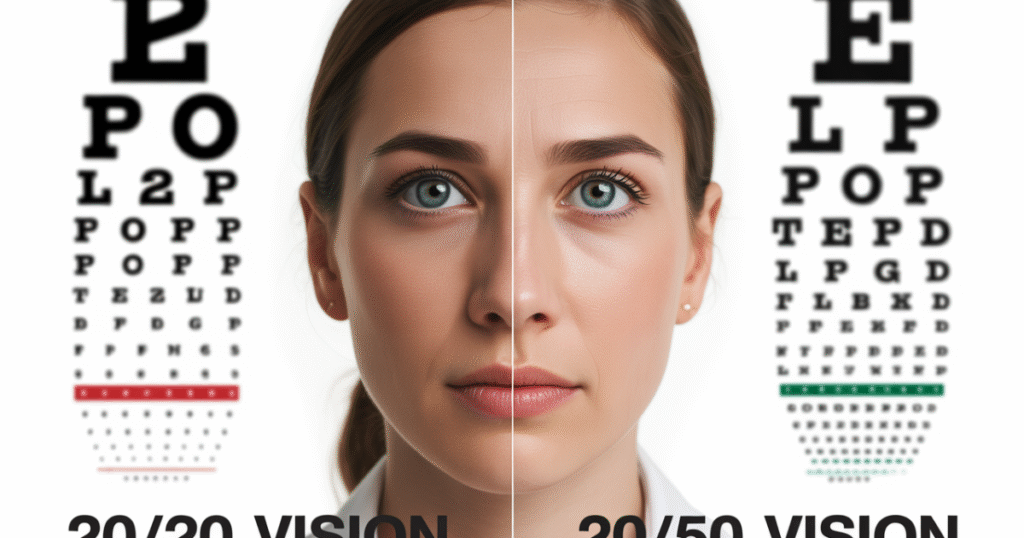
20/50 vision is a common way to describe how clearly a person can see at a distance, and it often indicates a mild level of visual impairment that may affect daily tasks.
When someone has 20/50 vision, objects at twenty feet appear as they would to someone with normal vision at fifty feet.
This condition can influence activities like driving, reading signs, and engaging in detailed work.
Understanding the causes, symptoms, and potential treatments for 20/50 vision helps individuals make informed choices about eye care and corrective options.
Ensuring better long-term eyesight, visual acuity, refractive error, optometry, and eye health for improved comfort and overall quality of daily vision experience.
How the Human Eye Focuses Light
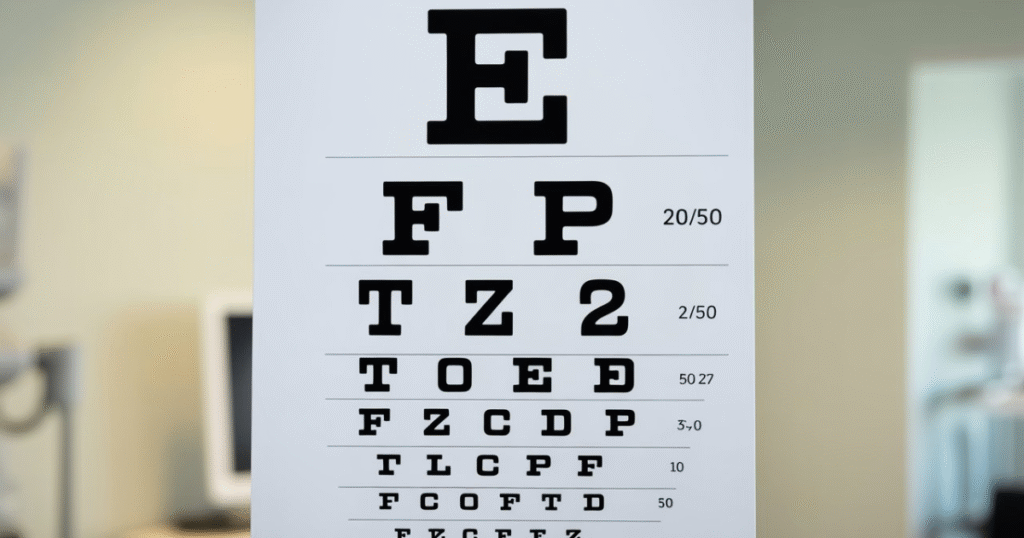
The human eye works like a camera. Light enters through the cornea, passes through the lens focusing power, and lands on the retina and macula, where photoreceptors convert it into signals for the brain.
This focusing mechanism of the human eye allows us to see objects clearly, whether they are near or far. The auto-focusing eye adjusts the lens shape to ensure that light bends correctly. This bending of light, or light refraction in the eye, is crucial for maintaining sharp vision.
When the cornea curvature or lens function changes, visual acuity measurement may reveal differences from normal. Our eyes constantly adjust to focus light on the retina.
Without this precise process, objects appear blurred. Understanding the focusing mechanism of the human eye provides insight into why people develop refractive error causes such as myopia, hyperopia, or astigmatism.
Maintaining good holistic vision improvement through lifestyle and nutritional eye support can preserve this function longer.
Understanding Refractive Errors (Myopia, Hyperopia & Astigmatism)
Refractive errors happen when the eye cannot focus light correctly. Myopia causes blurry distance vision because the eye is too long, making light focus in front of the retina.
In contrast, hyperopia causes trouble seeing close objects because the eye is too short, pushing light behind the retina.
Astigmatism explanation comes from corneal curvature irregularity, which bends light unevenly and causes distorted vision. People often use minus powered lenses for myopia and plus powered lenses for hyperopia.
Some refractive error correction options include glasses, toric lenses for astigmatism, or Lasik and PRK surgery. Glasses prescriptions show sphere, cylinder, and axis to correct these issues. Regular eye exams help detect abnormal eye length early.
Lifestyle strategies like eye-friendly nutrition and vision exercises program may support natural eyesight improvement, reducing strain caused by blurry distance vision.
Why Optical Correction Is Needed for Distance Vision
Distance vision affects many daily activities, including driving, sports, and watching movies. People with 20/50 vision often struggle with difficulty seeing at distance, recognizing faces, and reading street signs.
Using glasses or contacts helps improve distance vision problems by correcting myopia or astigmatism. Correcting vision also prevents eye fatigue and reduces headaches caused by squinting.
Visual efficiency percentage improves with proper correction. A person with 20/50 visual acuity may experience mild vision impairment, but a proper prescription restores best corrected vision.
Advanced treatments like refractive surgery options and custom contact lenses offer long-term clarity.
Combining these corrections with vision therapy exercises supports holistic eye health and can help reduce dependency on glasses.
Why Optical Correction Is Needed for Near Vision
Near vision issues become common with age. Presbyopia symptoms include blurred near vision, loss of focusing ability, and near vision fatigue when reading or using devices. These problems occur due to diopter power decline in the lens.
Using reading glasses power, bifocals vs progressive lenses, or multifocal IOLs can improve reduced range of focus and make near tasks easier.
Without correction, long-term near work can cause focusing muscle fatigue, ocular dryness, and headaches from eye strain. Combining natural vision improvement methods with proper optical aids enhances clarity.
Some people benefit from personalized eye training or eye health transformation program alongside bifocals and progressives. These solutions maintain both comfort and efficiency in daily life.
What Does 20/50 Vision Actually Mean?
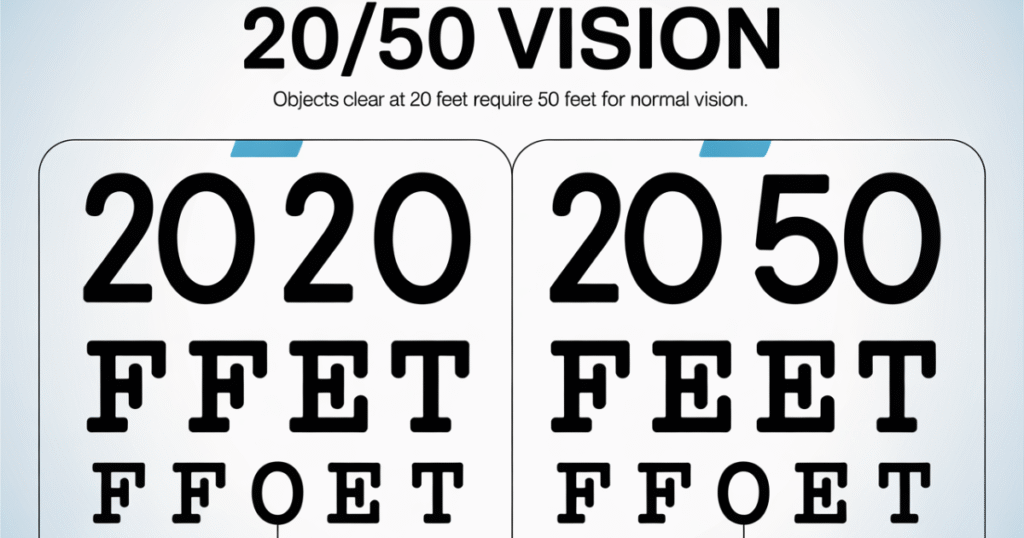
20/50 vision is a measurement of visual acuity. On a Snellen chart, it means a person can see at 20 feet what someone with normal vision sees at 50 feet.
This is considered mild vision impairment, which can cause difficulty seeing at distance or blurry distance objects. In metric 6/15 vision, the numbers reflect the same limitation.
Understanding 20/50 vs normal vision is crucial. People with 20/50 driving difficulty may struggle to see signs or obstacles clearly. Early detection through visual acuity fraction and regular eye exams ensures timely treatment.
Knowing your uncorrected vision versus best corrected vision helps choose the right glasses or contacts and plan for natural eyesight improvement.
Daily Life Impact & Challenges with 20/50 Vision
Living with 20/50 visual acuity can be challenging. Daily tasks like driving, reading street signs, watching movies, or recognizing faces become harder.
Even activities like shopping or walking in crowded areas can feel unsafe. Emotional impact of vision loss often includes frustration or anxiety.
People adapt by using assistive technology for vision, like digital magnifiers, screen readers, or vision therapy exercises.
Simple changes, such as better lighting or eye-friendly nutrition, also improve safety and comfort. Combining holistic vision improvement methods with optical correction helps restore confidence and independence in daily life.
Common Symptoms: Eyestrain, Fatigue & Blurry Vision
Eye problems often start subtly. Symptoms include eye fatigue, blurred near vision, fluctuating vision, and headaches from eye strain.
People who spend long hours on computers often experience screen glare problems, computer vision issues, and inadequate lighting effects. Even short tasks may trigger focusing muscle fatigue or ocular dryness.
Noticing these signs early allows for interventions like vision exercises program, regular breaks, or personalized eye training.
For persistent problems, glasses prescription explained by an optometrist or adaptive strategies for low vision can prevent long-term deterioration.
Maintaining holistic eye health reduces the risk of developing more severe refractive error causes.
How Eye Tests & Vision Checks Are Performed
Eye tests begin with a Snellen chart to measure visual acuity fraction. Technicians record uncorrected vision and best corrected vision.
More detailed tests examine the focusing mechanism of the human eye, light refraction in the eye, and overall eye health. Tools like the LogMAR vision scale help track visual efficiency percentage.
Eye exams also detect age-related vision decline or abnormal eye length that may cause distance vision problems or near vision fatigue.
Regular checks allow timely correction using bifocals and progressives, custom contact lenses, or refractive surgery options.
Following a comprehensive test ensures accurate glasses prescription explained and supports natural eyesight improvement.
How to Read and Understand Your Glasses or Contact Lens Prescription
Your prescription holds essential information. Sphere, cylinder, and axis indicate lens power needed to correct myopia, hyperopia, or astigmatism.
Contact lens base curve and diopter power determine the lens fit and focusing ability. Reading prescriptions correctly ensures effective correction.
People with 20/50 vision often benefit from bifocals and progressives for both near and distance tasks. Custom contact lenses or toric lens implants address astigmatism explanation.
Combining these tools with personalized eye training or vision exercises program enhances natural eyesight improvement and reduces long-term near work fatigue.
Perfect! Let’s continue and complete the blog post in the same easy-to-read, SEO-friendly, conversational style, making sure all LSI/NLP keywords are included naturally.
Treatment Options & Solutions for 20/50 Vision
Treating 20/50 vision depends on the cause. For refractive error correction, glasses or contact lenses are the most common solutions.
People with myopia causes use minus powered lenses, while hyperopia causes require plus powered lenses.
Those with astigmatism explanation benefit from toric lenses for astigmatism, which correct corneal curvature irregularity and restore clear vision.
Beyond lenses, Lasik and PRK surgery offer permanent improvement. Some people also use personalized eye training or vision exercises program to strengthen eye muscles and maintain natural vision improvement.
Combining these treatments with eye-friendly nutrition and holistic vision improvement supports long-term eye health and can help reduce dependency on glasses.
Advanced Technology Lens Implants (IOLs) for Cataract Surgery
Cataracts can worsen distance vision problems and 20/50 visual acuity. Modern surgery uses intraocular lens implants to replace the clouded lens.
Advanced technology lens implants include multifocal IOLs, accommodating lenses, and toric lens implants.
These lenses correct presbyopia symptoms, astigmatism, and age-related vision decline while reducing the need for glasses.
Patients often notice immediate improvement in both near and distance vision. Combining surgery with holistic vision improvement strategies, like nutritional eye support and personalized eye training, can enhance outcomes.
This approach ensures a smoother recovery and promotes natural eyesight improvement beyond traditional optical correction.
Assistive Technologies & Modern Tools for Better Vision
Living with 20/50 visual acuity can be easier with assistive technology for vision. Tools like screen readers, digital magnifiers, and adaptive strategies for low vision improve reading, work, and leisure activities.
Vision therapy exercises and personalized eye training programs enhance eye coordination and focusing ability.
Other helpful methods include holistic eye health practices such as eye-friendly nutrition, vision exercises program, and nutritional eye support.
These tools help reduce long-term near work fatigue, improve visual efficiency percentage, and support natural eyesight improvement.
Combining technology with daily eye care creates more independence and comfort for those with challenges with 20/50 eyesight.
Final Summary, What 20/50 Vision Means & How to Improve Your Eyesight
In summary, 20/50 vision indicates mild vision impairment where objects appear blurry at a distance. It can affect driving, sports, work, and social activities.
The main causes include refractive error causes like myopia, hyperopia, and astigmatism, as well as age-related vision decline leading to presbyopia symptoms.
Improvement comes from combining multiple strategies. Glasses prescription explained and custom contact lenses offer immediate correction. Lasik and PRK surgery or advanced technology lens implants provide long-term solutions.
Incorporating personalized eye training, vision exercises program, and nutritional eye support enhances natural eyesight improvement.
Using assistive technology for vision and maintaining holistic vision improvement ensures independence and safety. With proper care, people with 20/50 visual acuity can enjoy clear vision and a better quality of life.
FAQs
● What does a person with 20/50 vision see?
They see at 20 feet what a person with normal vision sees at 50 feet; distant objects appear blurry.
● Is +0.50 a weak prescription?
Yes, +0.50 is a very mild prescription, often barely noticeable.
● Can you drive without glasses with 20/50 vision?
It depends on state laws, but in many places, 20/50 may meet minimum driving standards without correction.
● Is 20/50 vision a disability?
Generally, no; it is mild vision impairment but not considered a disability.
● What vitamins help with eyesight?
Vitamins A, C, E, lutein, and zinc support eye health and may reduce age-related decline.