
 alishanasir237@gmail.com
Understanding 20/40 vision can feel confusing, especially when you hear these numbers during a routine eye exam.
Many people wonder how it affects their daily life, whether they can legally drive with 20/40 vision, or if it indicates a serious problem.
Essentially, 20/40 vision means that what someone with normal vision range can see clearly at 40 feet, you need to be 20 feet away to see the same detail.
This reflects a slightly less sharp vision than perfect 20/20 sight.
By learning more about 20/40 vision, you can take steps to protect your eyesight, improve clarity, and maintain long-term eye health.
What Is Visual Acuity?
Understanding What Does 20/40 Vision Mean starts with learning how specialists study vision measurement.
Visual acuity describes how well your eyes recognize shapes and letters during a visual acuity test, and your eye exam results depend on how clearly you identify symbols from a specific distance, usually in a quiet exam room.
In the USA, visual acuity helps explain fine detail challenges you may notice in everyday life.
Eye doctors use it to track vision problems caused by aging, early signs of refractive errors, or conditions like cataracts affecting vision.
These details help them make an accurate optometrist diagnosis for stronger daily comfort.
How Vision Is Measured (20/20 vs. 20/40)
Doctors use a Snellen chart to study how vision works because it relies on a standard testing distance where you read letters that get smaller line by line.
The chart helps them determine the smallest text you can read and compare your eyesight with someone who has traditional 20/20 clarity.
The comparison of 20/20 vs 20/40 vision explains where you stand in the functional vision range. If you have 20/40, you need to be 20 feet away to see what a person with 20/20 sees at 40 feet.
This difference often signals slightly less sharp vision, especially when reading signs outdoors.
What Does 20/40 Vision Actually Mean

The phrase meaning of 20/40 vision describes eyesight that isn’t perfect but still workable for many daily tasks.
People with this clarity sometimes struggle to resolve fine details far away, which can show up while watching sports, reading distant labels, or spotting landmarks along long U.S. highways.
Understanding What Does 20/40 Vision Mean also helps you know whether your eyesight needs support. Many Americans with these numbers still work comfortably but might feel occasional strain.
Some notice temporary blurry vision after long hours online, especially if screen time and eye fatigue cause added stress to the eyes.
Is 20/40 Vision Considered Bad?
Eye doctors in the USA often say it isn’t dangerous, but it can signal mild vision impairment if daily tasks feel harder.
It falls just outside the most common normal vision range, which is why many people seek vision correction solutions to sharpen their focus and reduce discomfort during busy days.
Most states allow people to legally drive with 20/40 vision, yet some drivers still experience difficulty seeing road signs at night.
If your job requires accurate distance clarity, such as on construction sites or delivery routes, understanding What Does 20/40 Vision Mean helps you stay safe and informed.
Is 20/40 Vision Nearsighted or Farsighted?
The question of whether 20/40 means myopia (nearsightedness) or hyperopia (farsightedness) depends on how your eye bends light.
Many Americans with these numbers notice distance vs near vision changes that match refractive errors, making far objects soft and causing the brain to work harder to stay focused.
Common Causes of 20/40 Vision
One common reason people search What Does 20/40 Vision Mean is because of uncorrected refractive errors.
These issues include myopia (nearsightedness), hyperopia (farsightedness), and the astigmatism causes that distort shapes.
People with these conditions notice fine detail challenges, especially outdoors or in fast-paced environments.
Another common reason involves presbyopia and aging, where your lenses stiffen naturally.
Some people also face changes because of glaucoma and vision clarity, corneal scarring, or eye conditions affecting visual acuity like cataracts.
Others simply use outdated prescriptions, which makes the world look washed out or soft.
How 20/40 Vision Affects Daily Life
For many Americans, What Does 20/40 Vision Mean becomes clear when daily tasks feel different. People often notice reading difficulty, especially when small text appears blurry on menus, phone screens, or product labels.
These struggles can make simple tasks feel slower and less comfortable. Driving is another area where effects show.
Some drivers feel unsafe because of blurred distance vision, especially during evening commutes where difficulty seeing road signs becomes stressful.
Others notice changes while enjoying hobbies that require precision, including painting, sewing, or recreational sports.
Do You Need Glasses With 20/40 Vision?
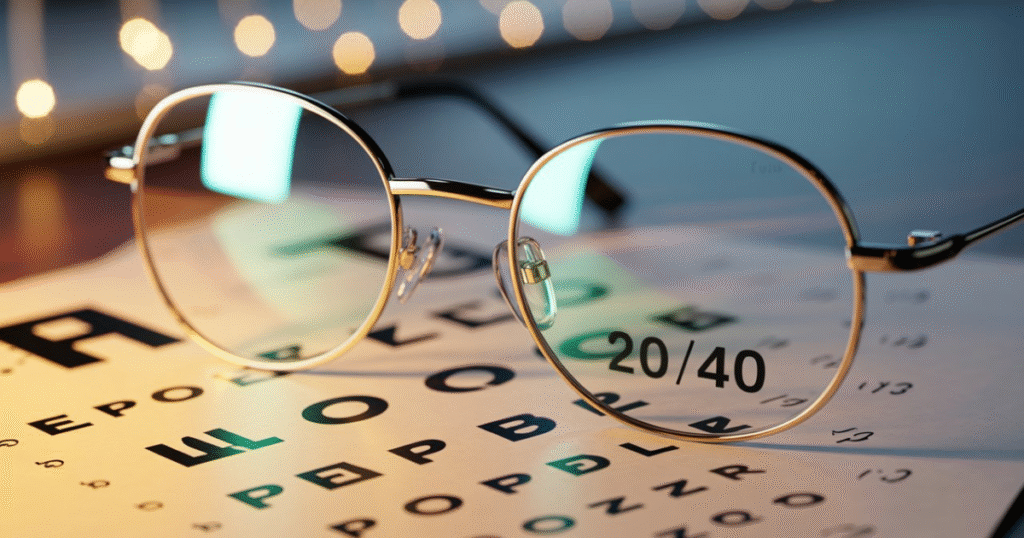
Your need for prescription eyeglasses depends on whether the clarity affects work, school, or comfort.
Many people choose glasses because they offer prescription lenses for clarity, especially when dealing with visual conditions affecting eyesight that make bright spaces overwhelming.
In most U.S. states, you can still legally drive with 20/40 vision, yet some people choose eyewear to feel safer.
Others explore alternative to glasses like lenses or surgery, especially when the world feels soft or when they notice struggle to resolve fine details that affect confidence on the road.
How to Correct or Improve 20/40 Vision
You can improve it using many vision correction solutions. Some choose glasses, while others prefer contact lens options because they enjoy a wider field of view.
These tools help correct vision problems that appear during busy days or long online sessions.
Many Americans also explore surgical correction options like LASIK surgery or PRK refractive surgery, both of which reshape the cornea.
Others focus on lifestyle changes for eye health, including hydration, rest, and a strong diet for eye health to support comfort and maintaining long-term eye health.
Understanding Your Eye Prescription
Reading an eye prescription helps you understand What Does 20/40 Vision Mean in a deeper way. It includes numbers for distance strength, astigmatism level, and reading power.
These values explain your optometrist diagnosis and how your eyes work together to build sharper comfort and safer days.
These details help you see whether you need stronger lenses or new frames.
The information also shows whether visual conditions affecting eyesight have changed over the years and how your eyes respond to daily strain from screens, weather, and stressful environments.
When to Get a Comprehensive Eye Exam
Many Americans schedule a comprehensive eye exam every one or two years, especially if they face temporary blurry vision from screens or sunlight.
These exams help doctors track vision problems caused by aging, early refractive changes, and any condition that affects clarity, comfort, or daily confidence.
Early testing also prevents long-term issues by spotting refractive errors and fine detail challenges before they grow.
People who understand What Does 20/40 Vision Mean tend to seek help earlier and enjoy stronger comfort with fewer surprises, whether at work, school, or home.
Choosing the Right Eyewear for Clearer Vision
Choosing eyewear becomes easier when you know What Does 20/40 Vision Mean and what support your eyes need.
Many Americans prefer prescription eyeglasses for everyday clarity, especially when frames fit well and make long reading sessions easier for people with reading difficulty or focusing struggles.
Others look for lightweight lenses that resist glare and scratches, especially when incoming light affects the clarity of your vision.
Choosing stable frames also helps people who move around often at work or outdoors, where strong durability prevents damage or discomfort during busy days.
Modern Technology That Improves Eye Care
Modern tools help your doctor understand What Does 20/40 Vision Mean using sharper images of your eye.
Machines like OCT scanners reveal how layers look in real time, helping detect early issues like glaucoma and vision clarity changes before daily comfort is affected.
Americans also benefit from advanced lenses, digital scan mapping, and comfortable contact lens options that feel natural after hours of use.
These tools protect against screen time and eye fatigue, reduce strain, and often help bring vision back to 20/20 with the right treatment plan.
FAQs
- Is 20/40 vision good or bad?
It isn’t bad, but it’s not ideal; it means you see at 20 feet what someone with normal vision sees at 40 feet. - Can you drive with 20/40 vision without glasses?
In most places, 20/40 vision meets the minimum legal requirement to drive without glasses. - Is 20/40 vision considered legally blind?
No, it is far from legally blind; legal blindness starts at 20/200 or worse. - What is the difference between 20/20 and 20/40?
20/20 is normal sharp vision, while 20/40 is slightly blurrier and shows reduced visual clarity. - What are the treatment options for 20/40 vision?
Common treatments include glasses, contact lenses, and in some cases vision therapy or corrective surgery.